LKprototype
You have many cnc machining cost factors that change your project’s price. These are material selection, part complexity, machining time, quantity, machine type and accuracy, surface preparation, and post-processing. Material types and machinability matter a lot. Skilled labor and machine setup also change costs. If you know these factors, you can make better choices and work faster. Each section will show you useful ways to control costs.
Key Takeaways
Know the main things that change cost: material choice, part shape, how long it takes to make, and how many you order all change CNC machining prices.
Pick common materials like aluminum or plastics to save money and make things faster.
Make your part design simple to cut down on time and cost; hard shapes need more time and special tools.
Buy more parts at once to make each one cost less; setup costs are split between more items, so each is cheaper.
Look at CNC machining and 3D printing; CNC works better for big orders, but 3D printing can cost less for small, tricky parts.
How Much Does CNC Machining Cost?

Average CNC Machining Cost Per Hour
CNC machining prices change by machine type and where you are. In the United States, shops charge $75 to $200 per hour. The price depends on what the shop can do. In Europe, a three-axis machine costs $35 to $50 each hour. Multi-axis machines cost $75 to $120 per hour. Here is a table with common hourly rates:
Machine Type | Hourly Rate (USD) |
|---|---|
3-Axis | $30 - $50 |
4-Axis | $50 - $80 |
5-Axis | $80 - $150+ |
Advanced machines cost more because they are faster and more accurate.
Typical Cost Range for Prototype Parts
Prototype parts cost more for each piece than production parts. You pay extra for setup and programming. If you need your part fast, the price can go up by 25–100%. Even small changes in how many you order can change the price.
Prototype parts are more expensive than production parts. This is because of setup costs and how prototyping works. When you make more parts, the price for each one goes down. This happens because the setup cost is shared by more parts.
Cost Differences Between Small Batch and Mass Production
Small batch CNC machining means higher costs for each part. This is because you make fewer items. Mass production makes the cost for each part lower as you make more. Small batches let you change parts more. Mass production makes lots of the same part.
Production Type | Unit Costs | Production Volume | Customization Level |
|---|---|---|---|
Small Batch CNC | Higher unit costs | 1 to 500 units | High customization |
Mass Production | Lower unit costs | Millions of identical parts | Limited customization |
Small batch CNC machining costs more for each part because you make less.
Mass production makes each part cheaper when you make a lot.
CNC Machining Cost vs 3D Printing
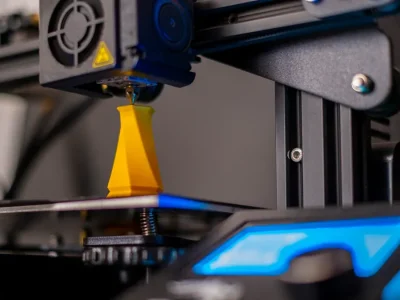
You might wonder how CNC machining and 3D printing compare. CNC machining is cheaper for making lots of parts. 3D printing can be cheaper for small amounts or tricky shapes. Here is a table to help you compare:
Production Volume | CNC Machining Cost | 3D Printing Cost |
|---|---|---|
High Volume | More Cost-Effective | Less Cost-Effective |
Low Volume | Less Cost-Effective | More Cost-Effective |
Part Complexity | Simpler Geometries | Complex Parts |
Knowing these cnc machining cost factors helps you pick the best way for your project.
Overview of CNC Machining Cost Factors
Material Selection
Picking the right material is very important for cnc machining cost. You should think about how much it costs, how easy it is to machine, and if you can get it easily.
Cost Differences Between Aluminum, Steel and Plastics
Aluminum is usually cheaper than steel or titanium. Plastics are often the least expensive. For example, Aluminum 6061 costs less than Aluminum 7075. If you choose a better metal, your price will be higher.
Machinability and Its Impact on Cost
Some materials are easier to cut and shape than others. Aluminum is fast to machine because it handles heat well. Harder materials like titanium take more time to cut. This means you pay more for work and machine use.
Material Availability and Sourcing
If your material is hard to find, you might wait longer and pay extra. Local materials are often cheaper and come faster.
Tip: Try to use common materials. This helps you save money and get your parts sooner.
Part Complexity
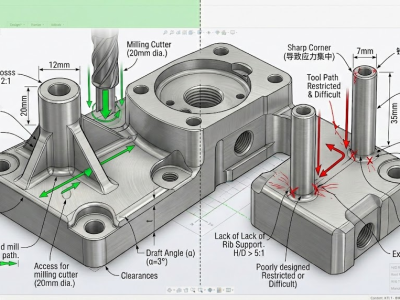
The shape and details of your part change the price. Simple parts are cheaper. Complex parts need special tools and more time.
Complex Geometries and Tight Tolerances
If your part has lots of curves or must fit exactly, it costs more. You need special tools and more checks to make sure it is right.
Undercuts, Deep Cavities and Thin Walls
Things like undercuts or thin walls make machining harder. These features slow down the work and may need custom tools.
Number of Setups and Tool Changes
If your part needs many setups or tool changes, you pay more. Each setup takes time and adds to the price.
Machining Time and Machine Type
The kind of machine and how long it runs are big cnc machining cost factors.
Cycle Time and Programming Time
Longer machining times mean you pay more. Harder materials or tricky shapes take longer to make. Programming also adds to the total price.
3-Axis vs 4-Axis vs 5-Axis CNC Machines
A 3-axis machine costs less to use than a 5-axis machine. Advanced machines can make harder parts, but they cost more each hour.
Machine Hourly Rate Differences
You pay more for advanced machines. For example, a 5-axis machine costs more per hour than a 3-axis machine.
Surface Preparation and Post-Processing
How your part looks and feels can change the price.
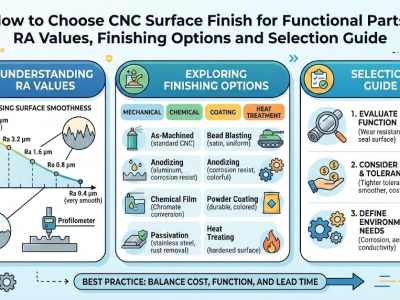
Surface Finish Requirements (Ra Values)
A smoother finish needs slower speeds and special tools. This makes the price go up.
Anodizing, Plating, Heat Treatment
Extra steps like anodizing or heat treatment add to the price. Each step means more work and materials.
Deburring and Secondary Operations
Taking off sharp edges or adding special finishes takes more time. These steps make the price and wait time go up.
Quantity and Order Volume
How many parts you order changes the price for each one.
Prototype vs Production Runs
Prototypes cost more for each part. Production runs spread setup costs over many parts, so each one is cheaper.
Batch Size and Economies of Scale
Bigger batches make the price for each part lower. You save money when you make more at once.
Setup Cost Distribution Per Part
Setup costs stay the same. If you make more parts, each part pays less of the setup cost.
Cost Factor Type | Examples | Impact on Production Volume |
|---|---|---|
Fixed | Setup time, Programming, Tooling | Paid no matter how many you make |
Scaled | Cycle time, Material usage, Inspection | Goes up with more parts or harder jobs |
You can control cnc machining cost factors by picking simple shapes, common materials, and making bigger batches.
CNC Machining Cost Breakdown Example
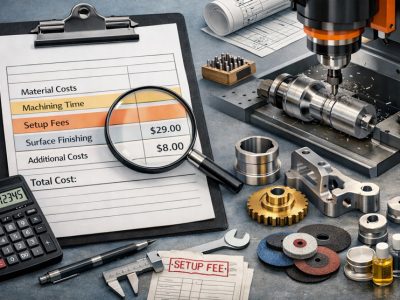
When you get a CNC machining quote, it has many cost parts. Each part changes the total price you pay. This breakdown helps you see where your money goes. It also helps you plan your budget.
Material Cost Portion
Material cost depends on what you pick and how much you need. Titanium costs more than aluminum. Plastics are usually the cheapest. If you choose rare materials, you pay more for finding and shipping them. The table below shows the main cost parts:
Cost Component | Description |
|---|---|
Material Costs | Changes with type and amount; titanium costs more than aluminum. |
Machine Time | Charged by the hour; price changes by machine type and how exact it is. |
Tooling and Consumables | Money for tools and supplies needed for machining; can change a lot. |
Overhead | Includes things like rent and power, split between jobs. |
Profit Margin | Added to cover business costs and make sure the shop earns money. |
Labor and Machine Time Cost
Labor and machine time are a big part of your CNC bill. You pay for the worker’s skill and the hours the machine runs. Here is what you should know:
Labor cost means paying the workers and programmers.
Machine time covers setup, programming, and making the part.
Good programming and smart machining can save time and money.
You can guess labor cost with this formula: Labor Cost = Unit Time Cost × Total Machining Time.
If your part is hard to make, needs many tool changes, or lots of setups, you pay more for labor and machine time.
Tooling and Setup Cost
Tooling and setup cost pays for tools and getting ready before machining starts. You pay for special cutters, holders, and the time to set up the machine. If your part needs custom tools or many changes, these costs go up. Setup cost stays the same if you make one part or many. If you order more parts, each part shares the setup cost.
Tip: You can lower setup cost by making bigger batches or making your part design simpler.
Post-Processing Cost
Post-processing means steps like deburring, bead blasting, anodizing, plating, and heat treatment. These steps make your part look better and stronger. Some finishes are cheap, like normal deburring. Others, like anodizing or heat treatment, cost more and take longer. Here is a quick guide:
Post-Processing Type | Cost Implication |
|---|---|
Standard Finishes | Not very expensive (like deburring, bead blasting) |
Anodizing and Plating | Extra cost for sending out and handling fees |
Heat Treatment | High cost and wait time for making parts harder |
You can control cnc machining cost factors by knowing each part of the breakdown. This helps you plan your project and find ways to save money.
How to Reduce CNC Machining Costs
You can do smart things to spend less on CNC machining. If you know cnc machining cost factors, you can make better choices for your project.
Simplify Part Geometry
Simple shapes help you save money. When your design is basic, the machine works faster and tools last longer. If you avoid tricky curves and deep holes, you need fewer setups. Shorter machining times mean you pay less. Simple shapes also mean you do not need to split parts into many pieces.
Tip: Use normal features and skip extra details. This makes your parts easier and cheaper to make.
Relax Tolerances Where Possible
Tight tolerances cost more money. Only use them where they are really needed. You can save up to half the cost by using strict measurements only in important spots. Checking tight tolerances can add 15–25% to the price. If you relax tolerances on looks, you can save 30–50%.
Choose Cost-Effective Materials
Pick materials that are easy to machine and not too expensive. Aluminum is easy to cut and does not cost a lot. ABS is cheap and good for test parts. Titanium is very strong but costs much more.
Material | Machinability | Cost-Effectiveness | Notes |
|---|---|---|---|
Aluminum | High | Cost-effective | Lightweight, corrosion-resistant |
ABS | Moderate | Affordable | Good for prototyping |
Titanium | Low | High | Exceptional strength, expensive |
Note: Using common materials helps you get parts faster and spend less.
Optimize for 3-Axis Machining
Try to design your parts for 3-axis machines. This makes machining faster and setup cheaper.
Aspect | 3-Axis Machining | Complex Machining |
|---|---|---|
Machining Time | Reduced | Increased |
Preparation Costs | Lower | Higher |
Material Costs | Cost-effective | Less cost-effective |
If you want advanced features, check if you really need them. You can learn more about CNC machining by visiting our CNC machined parts service page.
Increase Order Quantity
Ordering more parts makes each one cost less. Setup costs are shared by all the pieces, so each part is cheaper. If you order 10–100 parts, setup cost drops from 66.7% to 16.7%. Big orders can save you up to 57.68% compared to making just one part.
Order Quantity | Unit Price Calculation |
|---|---|
1 | (Setup Cost / 1) + Variable Cost per Part |
10 | (Setup Cost / 10) + Variable Cost per Part |
100 | (Setup Cost / 100) + Variable Cost per Part |
1000 | (Setup Cost / 1000) + Variable Cost per Part |
Buying in bulk makes prices steady and easier to guess.
CNC Machining Cost by Material Type
Aluminum CNC Machining Cost
People pick aluminum for CNC machining because it is easy to cut. It also costs less than other metals. Aluminum 6061-T6 gives a good mix of price and how well it works. If you use 7075-T6, you pay more money. This is because it makes tools wear out faster. Machining aluminum usually costs less each hour. You save money on the material and the time the machine runs.
Material Type | Cost Factors | Notes |
|---|---|---|
Aluminum | Cheaper to machine | 6061-T6 is cost-effective; 7075-T6 increases costs due to tool wear |
Raw material is about 15–25% of your total cost.
Machining takes up 50–70% of the budget. This includes machine time and tool wear.
Tip: Aluminum parts finish fast and need fewer new tools. You get your parts sooner and pay less.
Stainless Steel Machining Cost
Stainless steel costs more to machine than aluminum. You need special tools and must go slower. Stainless steel 304 is harder than 303. This means you spend more time and money.
The cheaper 304 stainless steel is fundamentally almost 50% harder and slower to machine than 303 stainless. That 5-10% you saved on the raw material is about to be completely erased by a 40-50% increase in machining time.
Machining stainless steel can cost two to three times more than aluminum.
You pay extra for tool wear and longer machine hours.
Titanium Machining Cost
Titanium is the most expensive material for CNC machining. You need special cutters and must go slow. Machining titanium takes more time and wears out tools faster. You pay higher rates for advanced machines.
Material Type | Cost Factors | Notes |
|---|---|---|
Titanium | Most expensive | Needs special tools and slow machining |
You spend more on the material and the work. Titanium parts often need extra checks and finishing.
Plastic CNC Machining Cost
Plastics are easier to machine and usually cost less. You finish parts faster and use cheaper tools. ABS and other plastics work well for test parts.
Material Type | Cost Factors | Notes |
|---|---|---|
Plastics | Easier to machine | Lower cost but less durable depending on application |
Plastics save you money on material and machining.
You may need to check if the part will last as long as metal.
Note: Plastics are best for test parts or when you do not need high strength.
CNC Machining Cost for Prototypes vs Production
Why Prototype Parts Cost More Per Unit
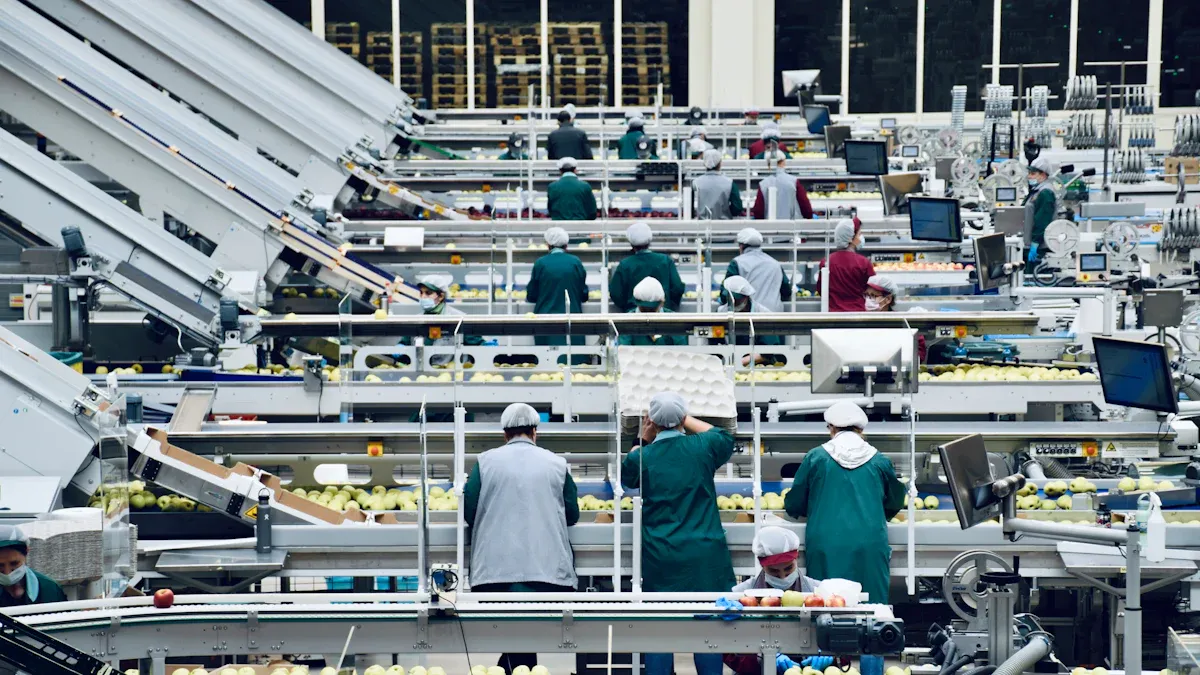
You pay more for prototype CNC parts than for production parts. This happens for several reasons. When you order prototypes, you usually need only a few pieces. The shop must set up the machine and program it for your part. These steps take time and skill. The cost for setup and programming does not change, no matter how many parts you make. If you only need one or two parts, you pay all the setup cost for each piece.
Setup and programming costs spread over fewer parts, so each unit costs more.
Prototype parts come in small batches, which increases the price per part.
Shops cannot negotiate lower prices for small orders.
If you want to test a new design, expect to pay more for each prototype. The shop must prepare everything just for your part, and you pay for that work.
Scaling Cost in Production Runs
When you move from prototypes to production, the cost per part drops. You make more parts, so the fixed setup cost spreads across all units. The shop can run the machine longer and use tools more efficiently. You also get better prices for materials and labor when you order in bulk.
Order Quantity | Setup Cost (Fixed) | Run Cost (Per Part) | Total Per Part |
|---|---|---|---|
1 Prototype | $250 | $50 | $300 |
50 Units | $250 | $45 | $50 |
500 Units | $250 | $40 | $40.50 |
Low-volume production means higher costs for each part because setup, tooling, and labor stay the same.
High-volume production lowers the price per part. Fixed costs spread out, so you pay less for each unit.
Modern CNC machines help reduce the gap between low and high-volume costs, but making more parts always saves money.
If you plan to scale up, you can save a lot by ordering more parts at once. This helps you reach your target price and makes your project more affordable.
FAQ
What is the average CNC machining cost per hour?
In the United States, CNC machining costs $75 to $200 per hour. In Europe, it costs $35 to $120 per hour. The price changes by machine type. A 3-axis machine costs less than a 5-axis machine. Advanced machines cost more because they work faster and make parts more accurate.
Tip: Ask your supplier about their hourly rates before you start.
Why is CNC machining expensive?
CNC machining costs a lot because you pay for skilled workers, machine time, and setup. You also pay for tools and materials. Complex parts need more time and special tools. Shops must keep machines running and pay for electricity. If you need tight tolerances or special finishes, you pay more.
Skilled workers and advanced machines make the price higher.
Setup and programming take time and add to the cost.
Materials and post-processing also raise the price.
How much does it cost to machine an aluminum part?
Machining an aluminum part usually costs less than machining steel or titanium. You pay for material, machine time, and setup. A simple aluminum part may cost $50 to $150. Complex parts cost more. Aluminum is easy to machine, so you save money on labor and tools.
Material | Typical Cost Range |
|---|---|
Aluminum | $50 - $150 |
Stainless Steel | $100 - $300 |
Titanium | $200 - $500 |
Is CNC machining cheaper than 3D printing?
CNC machining is cheaper for big batches and simple parts. 3D printing costs less for small batches and tricky shapes. If you need many parts, CNC machining saves money. If you need only a few parts or complex designs, 3D printing may cost less.
Note: Compare both methods based on how many parts and the shape.
How can I estimate CNC machining cost?
You can estimate CNC machining cost by looking at material, part complexity, machine time, and order quantity. Add setup, labor, and post-processing costs. Use tables or calculators from industry websites to help. Knowing cnc machining cost factors helps you make better choices and plan your budget.
Pick common materials and simple shapes to save money.
Ask for quotes from different suppliers.
Order more parts to lower the cost for each one.
You can control your CNC machining costs when you understand the main price factors. Talk with your supplier about your design and material choices. Small changes can save you money.
Choose simple shapes and common materials.
Order more parts when possible.
Smart decisions help you get better value and results for your project.