LKprototype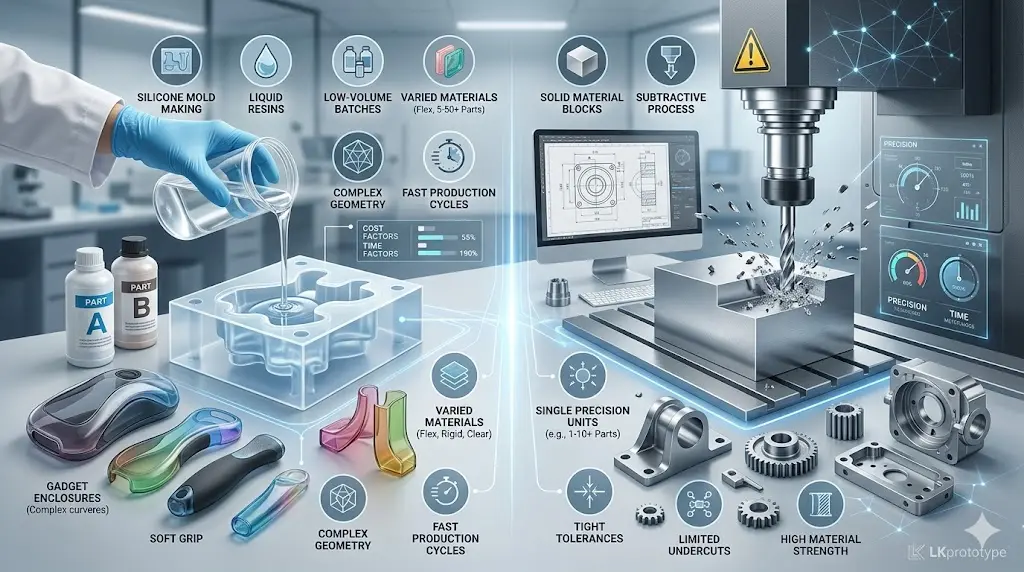
When you consider urethane casting vs CNC machining for prototypes, the best choice depends on your specific requirements. If you're looking to save money on small batches or need a mold quickly, urethane casting is an excellent option. On the other hand, CNC machining is highly precise and can accommodate a variety of materials, including metals and plastics. Here’s a quick chart to illustrate how both methods compare:
Process | Average Costs | Lead Times | Material Options |
|---|---|---|---|
Urethane Casting | Varies based on part hardness | Quick mold creation | Polyurethane materials |
CNC Machining | Varies with material and part hardness | Depends on part size | Metals, plastics, etc. |
Both methods have unique advantages for prototypes. You should choose one based on your project's cost, speed, and material requirements.
Key Takeaways
Urethane casting works well for fast and cheap prototypes. It lets you change designs quickly and try different materials.
CNC machining gives very accurate and steady results. It is good for strong parts that need exact sizes and can make hard shapes.
Pick urethane casting for small groups or when you want to test new designs without spending much money.
CNC machining saves money for bigger jobs. It makes tough parts and can use metals and special plastics.
Always think about what your project needs. Look at your budget, how fast you need it, and what materials you want before you pick a prototyping method.
URETHANE CASTING VS CNC MACHINING OVERVIEW
WHAT IS URETHANE CASTING FOR PROTOTYPES
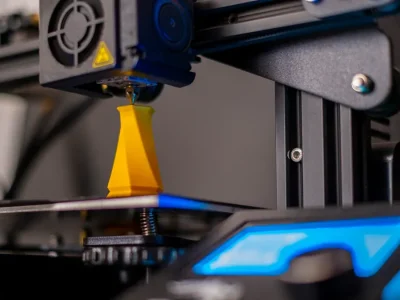
Urethane casting helps you make parts fast and cheap. First, you need a master model. People often use 3D printing to make this model. The model is used to create a silicone mold. Next, you pour liquid urethane into the mold. The urethane gets hard and becomes the part. You can make many parts from one mold. This method is good for small batches. You can pick how hard or soft your parts are. Urethane casting lets you test your ideas before making lots of parts.
Tip: Urethane casting lets you try new materials and finishes without spending a lot.
WHAT IS CNC MACHINING FOR PROTOTYPES
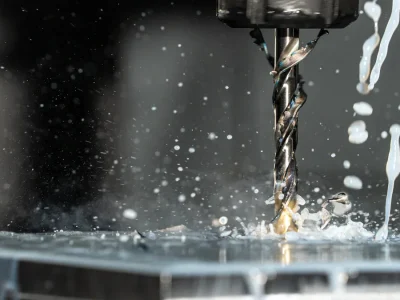
CNC machining uses computers to control machines that cut parts. You start with a solid block of metal or plastic. The machine follows a digital plan to shape the part. CNC machining makes parts very exact. It works for simple or hard shapes. This process gives you parts that are always the same. You can see how your design works in real life.
CNC machining is great for strong and tough parts.
You can use many materials like aluminum, steel, and engineering plastics.
KEY DIFFERENCES IN PROTOTYPE MANUFACTURING COMPARISON
When you look at urethane casting and CNC machining, you see they are different. Urethane casting uses molds and liquid stuff. CNC machining uses cutting tools and solid blocks. Urethane casting is faster for small amounts and lets you pick different materials. CNC machining is better for making parts that are very exact and always the same. Pick urethane casting if you want quick and cheap prototypes. Pick CNC machining if you need strong and exact parts.
Feature | Urethane Casting | CNC Machining |
|---|---|---|
Process | Mold-based | Subtractive |
Material Options | Polyurethane | Metals, Plastics |
Precision | Moderate | High |
Consistency | Good | Excellent |
URETHANE CASTING VS CNC MACHINING PROCESS
URETHANE CASTING PROCESS EXPLAINED
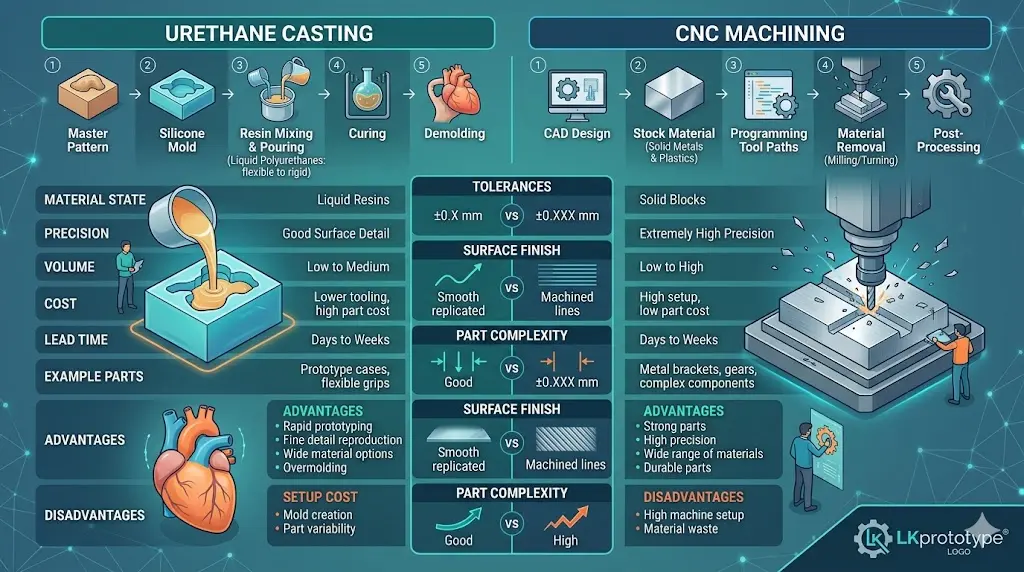
To begin urethane casting, you make a master pattern. Many people use 3D printing for this. You put the pattern in a box. Then you pour silicone over it. The silicone gets hard and makes a mold. Next, you mix liquid urethane and pour it in. The urethane hardens and becomes your part. You can do this again to make more parts. This method is good for small batches. You can try different materials and finishes. If you want to test new designs, you can change the master pattern easily.
Note: Urethane casting lets you change hardness, color, and finish without much extra work.
CNC MACHINING PROCESS EXPLAINED
CNC machining starts with a block of metal or plastic. A computer controls the machine. The machine cuts away material to make your part. You upload your design file to the machine. The machine follows your design exactly. CNC machining makes parts that are very exact. You can use many materials, like aluminum or steel. If you want to change your design, you must update the computer program. This process is good for strong and exact parts.
CNC machining gives you very tight tolerances.
Your parts will always match your design.
KEY STRENGTHS OF EACH PROCESS
When you compare urethane casting and CNC machining, you see big differences. Urethane casting uses soft molds and liquid resins. CNC machining uses solid blocks and cutting tools. One urethane mold can make many of the same part. CNC machining gives you very smooth and exact parts. Urethane casting lets you change designs fast by making a new master pattern. CNC machining needs a new computer program for changes.
Here is a table that shows how these processes are different:
Aspect | Urethane Casting | CNC Machining |
|---|---|---|
Process Type | Uses silicone molds and liquid urethane resins | Subtractive process using solid blocks of material |
Tooling Requirements | Soft molds, cost-effective for small quantities | Requires metal tooling, more expensive for low volumes |
Scalability | Can produce multiple identical parts from one mold | Typically less scalable for small runs |
Material Selection | Flexible with various urethane formulations | Limited to solid materials like metal or plastic |
Surface Finish | Generally good, but may vary based on mold quality | High precision and finish achievable |
Design Flexibility | Easy to modify by changing the master pattern | Requires reprogramming for design changes |
Pick urethane casting if you want fast changes and low costs for prototypes. Pick CNC machining if you need strong, exact, and repeatable parts.
COST COMPARISON BETWEEN URETHANE CASTING AND CNC MACHINING
SETUP AND TOOLING COST DIFFERENCES
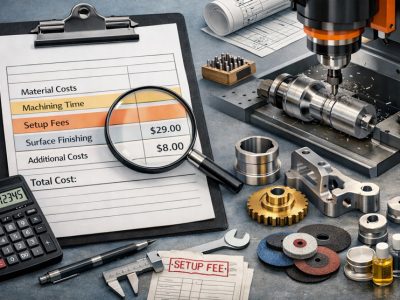
You need to look at setup and tooling costs when you compare urethane casting vs cnc machining. Urethane casting uses silicone molds. These molds cost much less than metal tools. You can expect to pay between $250 and $1,500 for a mold. The price depends on how complex your part is and what materials you choose. Silicone molds are also faster to make. CNC machining needs metal tools and machine setup. This process costs more at the start. You pay for the time to program the machine and set up the workpiece. If you want to save money on setup, urethane casting gives you an advantage.
PER PART COST COMPARISON
The per-part production cost changes based on how many parts you need. For small batches, urethane casting usually costs less per part. You can make only the number of parts you want. CNC machining has higher costs for each part if you only need a few. As you make more parts, the cost per part drops for both methods. CNC machining becomes more cost-effective for larger runs. You also get high precision and consistency with CNC machining. If you need just a few prototypes, urethane casting helps you keep costs low.
Method | Setup Cost | Per-Part Cost (Low Volume) | Per-Part Cost (High Volume) |
|---|---|---|---|
Urethane Casting | Low | Low | Moderate |
CNC Machining | High | High | Lower |
COST EFFICIENCY FOR LOW VOLUME MANUFACTURING
You want to choose the most cost-efficient manufacturing process for low volumes. Urethane casting stands out here. You pay lower tooling costs and can change your design quickly. You do not risk wasting money if you need to change your part. You can make only what you need and avoid extra inventory. CNC machining works well if you need high precision or special materials. For most low-volume projects, urethane casting saves you time and money.
Tip: If you expect to change your design, urethane casting lets you test ideas without a big investment.
SPEED AND LEAD TIME COMPARISON
PROTOTYPE TURNAROUND TIME FOR EACH METHOD
When you look at urethane casting and CNC machining, you should check how fast you get your parts. Turnaround time means how long it takes to get your prototype after you start. Here is a table that shows how long each method usually takes:
Prototyping Method | Typical Lead Time |
|---|---|
Urethane Casting | 7–10 business days |
CNC Machining | 3–10 days |
CNC machining can sometimes be a little faster, especially for simple shapes. Urethane casting usually takes about a week or a bit more. Both ways are good for making a small number of parts. You should pick the one that fits your project best.
FACTORS AFFECTING PRODUCTION SPEED
Many things can change how fast you get your prototype. You should think about these things before you pick a way to make your part:
How long it takes to make each part
What machines are used in the shop
What materials you pick for your part
How hard your design is to make
How many parts you need, especially if you need just a few
How exact your part needs to be
If your part needs a special finish
If your design is tricky or uses a special material, it can take longer. If you want every part to be the same or need a special look, this can also add time.
WHICH METHOD IS FASTER FOR RAPID PROTOTYPING
If you want your prototype as fast as possible, you should know that vacuum casting, which is a kind of urethane casting, is often quicker than CNC machining. The steps for curing and casting in urethane casting are shorter than the cutting and finishing steps in CNC machining. This makes urethane casting a good choice for quick, small batches when you do not need parts to be super strong. CNC machining is better if you need your parts to be very exact or tough.
Tip: If you want to change your design fast and make a few parts, urethane casting helps you get them quickly and try out your ideas without waiting a long time.
MATERIAL AND PERFORMANCE COMPARISON
MATERIAL OPTIONS IN URETHANE CASTING VS CNC MACHINING
You can pick from many materials for prototypes. Urethane casting uses liquid resin and silicone molds. This way, you get parts that look the same and feel smooth. You can choose hard, bendy, or clear materials. Here are some examples:
Rigid clear polyurethane makes strong, see-through parts.
Rubber-like polyurethanes come in different softness levels.
Clear rubber-like polyurethanes are flexible and see-through.
ABS-like and polycarbonate-like urethane plastics are hard.
Flexible and elastomeric urethanes are soft and bend easily.
Some urethane materials look and feel like real products. This helps you test how different materials work. CNC machining starts with solid blocks of metal or plastic. You can use aluminum, steel, or special plastics. This method gives you more choices if you want real production materials.
Material Type | Properties/Characteristics |
|---|---|
Rigid Clear Polyurethane | Shore D 80 hardness, versatile, clear material |
Rubber-Like Polyurethanes | Seven varieties, Shore A 30 to Shore A 90 |
Clear Rubber-Like Polyurethanes | Four varieties, Shore A 45 to Shore A 90 |
Rigid Urethane Plastics | ABS-like, polycarbonate-like, high-temperature urethanes |
Flexible and Elastomeric Urethanes | Rubber-like, Shore A 20 to Shore A 90 |
FUNCTIONAL PERFORMANCE AND DURABILITY
You want your prototype to act like the real thing. Urethane casting lets you test parts that bend, stretch, or stay clear. These parts are good for quick tests and short use. CNC machining makes parts that are very exact and strong. Every part comes out the same. Machined parts last longer and work well for tough jobs. If you need a prototype for hard tests or a working model, CNC machining is a smart choice.
Note: Urethane casting is great for fast changes and soft or bendy parts. CNC machining is best for strong, exact, and long-lasting parts.
WHEN TO USE ELASTOMER VS MACHINED MATERIALS
Pick elastomer materials if you need parts that bend, take hits, or feel soft. These are good for gaskets, seals, and soft-touch parts. They bend and go back to their shape. Here is a quick chart:
Material Type | Common Materials | Key Properties | Best Prototyping Use | Limitations |
|---|---|---|---|---|
Rubber / Elastomers | TPU, Silicone, TPE | Flexible, impact-resistant | Gaskets, seals, soft components | Lower strength, less stable shape |
CNC machining is better for parts that must be strong, very exact, or made of metal. Use elastomers for soft, bendy parts. Use machined materials for hard, precise parts. For small batches, urethane casting lets you try many elastomer types before making lots of parts.
DESIGN FLEXIBILITY COMPARISON
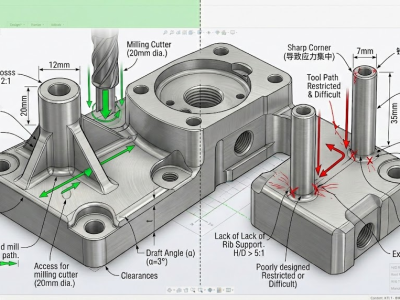
COMPLEXITY AND GEOMETRY CAPABILITIES
If you want to make prototypes with special shapes, urethane casting can help. You start by making a master pattern. People often use 3D printing or cnc machining for this. The pattern goes in a box, and you pour liquid silicone over it. When the silicone gets hard, it forms a mold. This mold can show tiny details and tricky shapes. Urethane casting lets you make parts that are hard to create with other ways.
Urethane casting is good for detailed designs and parts with undercuts.
You can use more than one material in a single part.
Cnc machining is very exact but works best for simple shapes.
If your prototype needs lots of detail or special features, urethane casting is a good pick.
DESIGN ITERATION AND MODIFICATION SPEED
You might want to change your design many times before you finish. Urethane casting lets you do this fast. You can make new patterns quickly and for less money. This helps you test ideas and fix your design without waiting long. You can try different versions in a short time. Cnc machining takes longer to set up and program. Every change makes the process slower. If you want to work fast and make lots of changes, urethane casting is better.
Tip: Pick urethane casting for small batches if you need to test and change your design often.
LIMITATIONS IN EACH PROCESS
Both methods have some limits you should know:
Urethane casting needs molds, which cost more if you only make one or two parts.
Cnc machining is not as good for small batches.
Setting up cnc machining can slow down your project.
You might also see these problems:
Air bubbles can get trapped in the cast and cause problems.
Parts can shrink as they get hard, changing their size.
If the mold is not made well, the surface can be rough.
Knowing these limits helps you choose the best way for your project.
SURFACE FINISH AND QUALITY COMPARISON
SURFACE FINISH DIFFERENCES
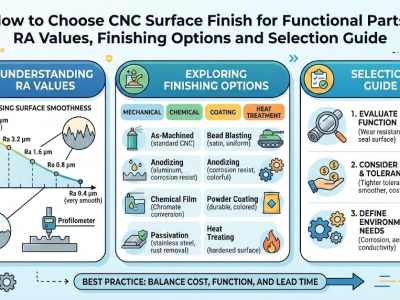
You want your prototype to look like the real thing. The way the surface feels and looks is important. Urethane casting can make parts smooth if the mold is good. You can add different textures or copy SPI finishes. Sometimes, small bubbles or marks show up in cast parts. CNC machining makes parts with very clean and sharp surfaces. The edges are crisp and the finish is neat. Machined parts often look more ready to use and professional.
Tip: If you want a special texture, you can ask for it when using urethane casting.
VISUAL QUALITY AND DETAIL ACCURACY
You care about how your prototype looks and how well it shows details. CNC machining gives you high quality and sharp details. You see clear lines and exact shapes. Urethane casting gives you okay quality. Some small details may not be as sharp, like tiny letters or corners. Cooling can change the shape a little. Here is a table to help you compare:
Technique | Visual Quality | Detail Accuracy | Material Compatibility | Cost Effectiveness |
|---|---|---|---|---|
Urethane Casting | Moderate | Lower | Limited | Cheaper |
CNC Machining | High | Higher | Diverse | More Expensive |
Both methods let you design parts with different wall thicknesses. Keeping the thickness the same helps stop shrinking or bending in urethane casting.
POST PROCESSING REQUIREMENTS
You might need to make your prototype look better after making it. Both urethane cast and CNC machined parts can be finished more. Here are some things you can do:
You can polish urethane cast parts to make them shiny.
You can paint parts to get the color you want.
You can add special finishes to copy textures.
You can fix small marks or bubbles with extra work.
You can add letters or logos, but sharp corners may get rounded when cooling.
Doing more finishing steps can make the cost go up. You should plan for these steps if you want your prototype to look just right.
Note: The thinnest wall for urethane cast parts is 0.040” (1mm). For small parts, you can go down to 0.020” (0.5mm). Most parts have tolerances around ± 0.015” or ± 0.003 per inch.
VOLUME COMPARISON FOR PROTOTYPE MANUFACTURING
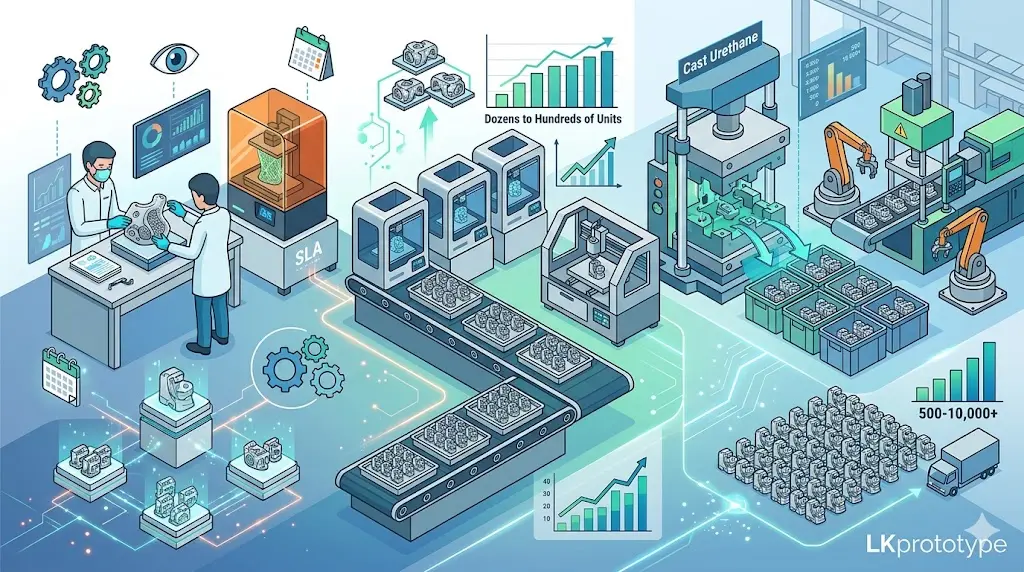
LOW VOLUME MANUFACTURING COMPARISON
Sometimes you only need a few prototypes or want to test an idea. Urethane casting is good for making small batches fast. You can change your design without spending a lot of money. This way, you can try out different shapes or materials before picking the final one. CNC machining can also make a few parts, but it costs more to set up. If you want parts that are strong and very exact, CNC machining is a good choice. For most quick tests, urethane casting saves both time and money.
MID VOLUME PRODUCTION SUITABILITY
If you need more than just a few parts but not thousands, this is called mid-volume production. Urethane casting still works well here. One silicone mold can make many copies, sometimes up to 25 or more before it wears out. If you need even more parts, you can make new molds from the same master pattern. CNC machining can also make mid-volume batches, but the price per part only goes down when you make a lot at once. You get the best results when you pick the right method for your needs. Urethane casting gives you more choices, while CNC machining gives you very exact parts.
SCALING FROM PROTOTYPE TO PRODUCTION
You might want to go from making a few samples to making more. Urethane casting helps you move from early prototypes to bigger runs. This method lets you change your design as you work. CNC machining can make strong master patterns for molds, and you can use these again and again. CNC machining also gives you a smooth finish, which is important for making good molds. Here are some ways both methods help you make more parts:
Urethane casting is good for small runs and fast testing.
CNC machining makes strong masters for molds you can reuse.
Urethane casting lets you change your design from start to finish.
CNC machining makes sure your molds are high quality and detailed.
Tip: Try urethane casting first for fast changes, then use CNC machining for parts that need to last longer or have more detail.
URETHANE CASTING VS CNC MACHINING COMPARISON TABLE
SIDE BY SIDE COMPARISON OF COST SPEED AND QUALITY
If you want to see how urethane casting and cnc machining are different, check this table. It shows how they compare in cost, speed, and quality. This makes it easier to pick the right one for your prototype.
Feature | Urethane Casting | CNC Machining |
|---|---|---|
Cost | Low tooling cost | Higher cost per part for lower quantities |
Speed | Short lead time | Generally longer lead time for setup |
Quality | High precision and tighter tolerances | |
Production Volume | Suitable for 10–100 units | More efficient for larger quantities |
Design Flexibility | Limited by mold design | High design flexibility |
Tip: Use this table to help match your project with the best process.
Here are some simple points to help you choose:
Urethane casting is great for small batches. You spend less on tools and get parts fast.
CNC machining lets you change your design more. You can make tricky shapes and get very exact parts.
Urethane casting gives a smooth finish. CNC machining is better for tight tolerances.
For 10 to 100 parts, urethane casting saves money. For bigger batches, cnc machining works better.
Think about what is most important for your prototype. Do you want to save money, get parts fast, or need high accuracy? This table and list help you decide.
WHICH IS BETTER URETHANE CASTING OR CNC MACHINING
BEST USE CASES FOR URETHANE CASTING
Pick urethane casting if you need only a few parts. It is good for testing your design before making lots of them. This way, you can see how your product looks and feels without spending much. The parts look almost like real finished products. Urethane casting helps you turn ideas into real things fast.
Use this method when you need parts quickly.
It is helpful if you want special colors or textures.
You can make parts with different hardness in one piece.
Early product tests often need just a few samples.
Urethane casting lets you make many test parts for less money. You get your parts faster than with old-style molding. It works well for checking if your design is right, for engineering tests, and for samples before big production. This method is also good if your design changes a lot, if you want to see if people like your product, or if you need samples to show before making more.
BEST USE CASES FOR CNC MACHINING
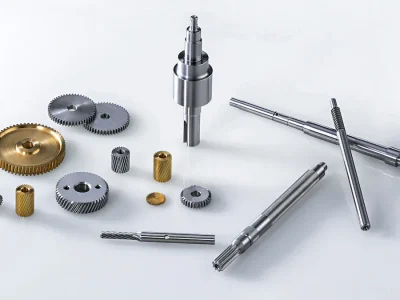
CNC machining is best when you need strong and exact parts. Use it for shapes that are hard to make or when you need to cut away material fast. CNC milling is good for tricky shapes. CNC turning makes round things like pins or shafts. Electrical discharge machining helps with tiny or detailed parts.
You see CNC machining in planes, cars, hospitals, farms, and electronics.
The parts are strong and almost like the final product.
This method keeps parts very close to the right size.
You can trust CNC machining for parts that must fit just right.
HOW TO CHOOSE THE RIGHT PROTOTYPING METHOD
Think about what your project needs before you pick a method. If you want to try many ideas, need only a few parts, or want to save money, urethane casting is a smart choice. If you need parts that are very strong, need to be exact, or need special materials, CNC machining is better. Look at how much time you have, your budget, and how many parts you want. Ask yourself if you will change your design a lot or if you need the most exact parts. The best way depends on what is most important for your prototype.
Tip: If you are not sure, talk to an expert. They can help you pick the best way for your needs.
ADVANTAGES AND LIMITATIONS OF EACH METHOD
BENEFITS OF URETHANE CASTING
Urethane casting has many good points for making prototypes. This method lets you turn ideas into real parts fast. Here are some main benefits in the table below:
Benefit | Description |
|---|---|
Speed | You can get parts in just a few days. This helps you test and change your design quickly. |
Cost-effectiveness | Silicone molds are cheap and quick to make. You do not risk losing much money. |
Versatility in material simulation | You can copy many types of plastics and elastomers. This helps you see how your part will work. |
High-quality surface finishes | Silicone molds show small details. Your parts look almost like real products. |
Ideal for various industries | Many areas use this method, like cars and electronics. |
Faster development cycles | You can check your ideas fast and lower project risks. |
Tip: Urethane casting lets you try new ideas without spending much money or time.
BENEFITS OF CNC MACHINING
CNC machining has strong points for making prototypes. You can count on this method for being exact and quick. Here are the main benefits:
You get very exact parts. They can be within +/- 0.005 inches or even closer.
You do not pay a lot for tools at the start. This saves money for small batches.
You can change your design fast and get new parts quickly.
You have freedom to change your design and test new ideas often.
You can see how your part works and make sure it is right.
You get parts that work well for tests and showing others.
Note: CNC machining helps you make strong, exact parts that are ready for real use.
LIMITATIONS OF BOTH PROCESSES
Both urethane casting and CNC machining have some limits you should know. These can change your results if you do not plan ahead.
If you do not clean casting machines well, leftover color can show up in new parts.
If you do not make molds well, bubbles can form in your cast parts.
CNC mills can only make parts up to a certain size.
CNC turning can only make parts up to a certain width.
Remember: Good planning and skilled workers help you avoid most problems in any manufacturing process.
FAQ ABOUT URETHANE CASTING VS CNC MACHINING
IS URETHANE CASTING CHEAPER THAN CNC MACHINING
You often find that urethane casting costs less for small batches. The molds use silicone, which is not expensive. You do not need to pay for hard metal tools. If you want only a few prototypes, you save money with this method. For larger numbers, the cost per part can go up. When you need hundreds of parts, the price difference gets smaller.
Tip: If you want to test your design without spending a lot, start with urethane casting.
WHICH METHOD IS MORE ACCURATE
CNC machining gives you higher accuracy. The machines follow your design closely. You get tight tolerances and sharp details. Urethane casting is good for most prototypes, but it cannot match the precision of machined parts. If you need parts that fit together perfectly, choose machining.
Method | Accuracy Level |
|---|---|
Urethane Casting | Moderate |
CNC Machining | High |
CAN URETHANE CASTING REPLACE CNC PARTS
You can use urethane casting for many prototypes. It works well for testing shapes, colors, and finishes. If you need parts that bend or feel soft, casting is a smart choice. For parts that must be strong, exact, or made from metal, you should use machining. Urethane casting cannot always replace machined parts in tough jobs.
WHAT IS THE BEST PROTOTYPING METHOD
The best method depends on your project. If you want to try many ideas fast and keep costs low, pick urethane casting. If you need strong, exact, or metal parts, choose cnc machining. Think about how many parts you need, how fast you want them, and what they must do. You can always ask an expert for advice.
Note: The right choice helps you save time and money while getting the results you want.
CONCLUSION
You now have a clear understanding of urethane casting and CNC machining for prototypes. Both methods offer unique strengths. Your choice depends on what matters most for your project.
Urethane casting works best when you want to save money, need a small batch, or want to test different designs quickly. You can try out many materials and finishes. This method helps you get parts fast and change your design without spending much.
CNC machining gives you strong, exact parts. You can use metals and engineering plastics. If you need tight tolerances or want to see how your part will work in real life, CNC machining is a smart pick.
Tip: Always match your method to your project’s needs. Think about cost, speed, material, and how many parts you need.
Here is a quick table to help you decide:
Priority | Best Method |
|---|---|
Low cost, fast | Urethane Casting |
High precision | CNC Machining |
Metal parts | CNC Machining |
Flexible parts | Urethane Casting |
Design changes | Urethane Casting |
You should weigh your priorities before making a choice. If you want to move from prototype to production, talk to an expert. They can help you pick the right process for your unique project.
Remember, the best method is the one that fits your goals. Use this guide to make your next prototype a success! 🚀
You should choose urethane casting if you want fast, low-cost prototypes or need to test different designs. CNC machining works best when you need strong, precise parts or want to use metals.
Think about your budget, how quickly you need parts, and what materials you want.
Check if your design is simple or complex.
Tip: If your project is unique or you feel unsure, talk to a prototyping expert. They can help you make the right choice.