LKprototype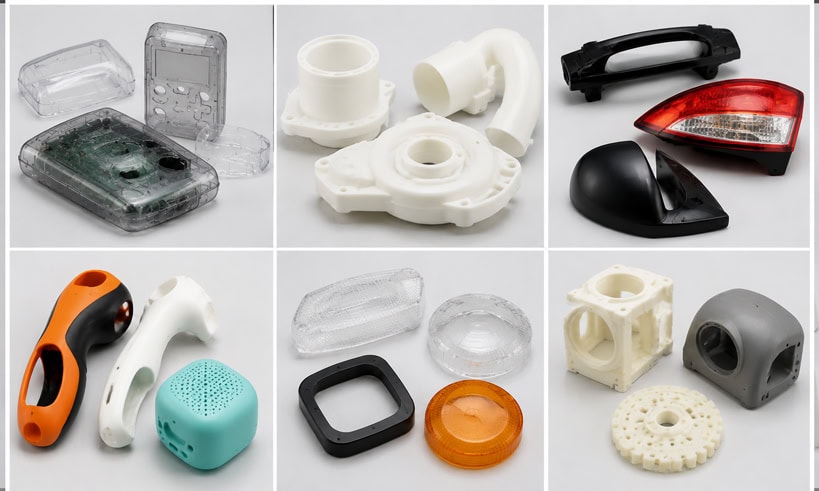
You build a product appearance prototype using basic cmf parameters. Your team matches design goals with nice surface finishing. Strict validation helps too. High-fidelity prototypes let you check looks fast. You avoid expensive hard tooling this way. These models help with early functional testing. A visual prototype turns good looks into reality. Expert manufacturing from LKprototype ensures great quality. They deliver perfect cmf results.
Key Takeaways
Appearance prototypes show real colors, textures, and shapes.
They test product looks before mass production starts.
Engineers use CNC machining to make models fast.
They also use vacuum casting and 3D printing.
These methods create very realistic visual models quickly.
Smart CMF selection joins color, material, and finish.
This helps define your clear brand identity and feel.
Quality control tools help check every single detail.
Gloss meters and light booths ensure perfect surface finish.
They also check for true color accuracy every time.
An approved golden sample sets a clear visual standard.
This sample helps ensure error-free mass manufacturing later.
UNDERSTANDING APPEARANCE PROTOTYPES
WHAT IS AN APPEARANCE PROTOTYPE
Appearance prototypes show your product design vision. This model copies real colors and finishes. It matches final textures and exact dimensions. Engineers use rapid prototyping to build them. Makers use CNC machining services for precision. They mill plastics or metal parts easily. Use vacuum casting services from LKprototype instead. You can cast detailed prototypes very fast.
WHY APPEARANCE PROTOTYPES MATTER
Great design drives product sales success. High-quality prototyping tests comfort and looks. Do this before starting mass production. Early reviews reveal design flaws fast. Smart rapid prototyping saves development money. LKprototype uses fast rapid prototyping methods. They make perfect physical prototype samples. Clients can review these samples easily.
APPEARANCE VS FUNCTIONAL PROTOTYPES
Functional models test real technical performance. They check features instead of good looks. You check strength through functional testing. Appearance prototypes show external beauty instead.
Feature | Appearance Prototypes (Looks-like) | Functional Prototypes (Works-like) |
|---|---|---|
Primary Focus | Copy final looks, shape, and size | Show real working features and tech |
Component Types | Uses custom outer shells and cases | Uses standard parts with custom pieces |
Fabrication & Materials | Made with clay, prints, or machining | Made with wires, boards, and sensors |
ROLE IN PRODUCT DEVELOPMENT
Hardware creation relies on rapid prototyping. Use prototyping to align your teams. This helps design and factory staff. Good prototype development speeds up validation. Engineers test function alongside visual looks. Modern rapid prototyping turns designs into reality.
APPEARANCE PROTOTYPE MANUFACTURING PROCESS
DESIGN REVIEW AND REQUIREMENTS
Check every design detail first. Look at sizes and testing goals. Early reviews help guide prototype creation.
MATERIAL SELECTION STRATEGY
Picking good materials brings success. Compare plastic strength and looks. Here are top rapid prototyping options:
Material / Technology | Surface Finish Quality | Key Capabilities for Appearance Prototyping |
|---|---|---|
SLA Resins | Smooth and detailed | Shows small details clearly or solidly. |
PolyJet Photopolymers | Smooth with high detail | Fits multi-color and visual models best. |
Your material plan aids CMF design.
PROTOTYPE MANUFACTURING METHODS
New methods make physical prototypes fast. Pick CNC machining, casting, or printing. LKprototype provides great CNC machining services. Their vacuum casting services make realistic models.
Manufacturing Method | Surface Roughness (Ra) | Visual & Tactile Characteristics | Dimensional Precision / Tolerances | Appearance Prototype Fidelity |
|---|---|---|---|---|
CNC Machining | 0.8–3.2 μm (polished ≤ 0.8 μm) | Clean look with small tool marks. | ±0.0127 mm to ±0.127 mm | Highest accuracy for engineered models. |
Vacuum Casting | 1.6–3.2 μm | Smooth surface like molded plastic. | ±0.3 mm to ±0.55 mm (under 150 mm) | Best visual style for display samples. |
3D Printing (SLA/Additive) | 3.2–6.3 μm | Shows layer lines; needs extra smoothing. | ±0.08 mm to ±0.5 mm (details down 0.05 mm) | Flexible shapes, but needs hand work. |
SLA and PolyJet printing build shapes fast.
SURFACE FINISHING APPLICATION
Tip: Good finishing adds a top-grade surface touch.
Workers polish every surface before painting. Experts apply custom texture layers next. Right finishes get models ready for testing.
CMF APPROVAL PROCESS
Set strong CMF rules early. Check CMF design under special lights. Prototyping teams approve colors fast. Smart rapid prototyping speeds up visual checks.
CMF DESIGN AND SELECTION FRAMEWORK
COLOR MATERIAL AND FINISH BASICS
Smart CMF choices build product personality. A strong plan keeps teams aligned.
CMF Element | Core Focus | Impact on Product & User Experience |
|---|---|---|
Color | Feelings & Brand Style | It sparks feelings. It helps people know your brand. |
Material | Choice & Use | It blends looks and real strength. It counts weight and cost. |
Finish | Touch & Sight | It changes surface feel. It hides spots and adds grip. |
New CMF ideas use smart logic. One chart helps manage many items. This solid plan keeps models looking neat. It matches build needs well.
AESTHETIC AND TACTILE REQUIREMENTS
You test surface feel on actual models. Good design picks improve user touch. Top projects need exact early samples.
Tip: You can combine 3D printing and rapid prototyping to preview complex shapes before factory setup.
Makers test resin parts using 3D prints. You check surface details under lights. Good planning speeds up sample reviews.
MATERIAL CONSTRAINTS AND DFM
Your stuff picks change factory output. Raw items bring distinct build tests. Pick top items now. Check build rules for 3D resin. Review plastic, metal, and cast resins. This step ensures proper item use.
LKprototype solves hard factory issues. Their team offers CNC machining services for metals. Order resin parts with vacuum casting services quickly. This work helps fast testing.
BALANCING DESIGN AND PRODUCTION NEEDS
Good CMF balances looks and costs. Align your vision with factory power. Early tests prevent costly tool fixes. Build real models to test ideas. Follow clear CMF rules.
Shops copy exact CMF goals easily. Tweak each CMF detail during tests. This helps your team win. Get great surface looks every time.
SURFACE FINISHING FOR APPEARANCE PROTOTYPES
HIGH-GLOSS POLISHING STANDARDS
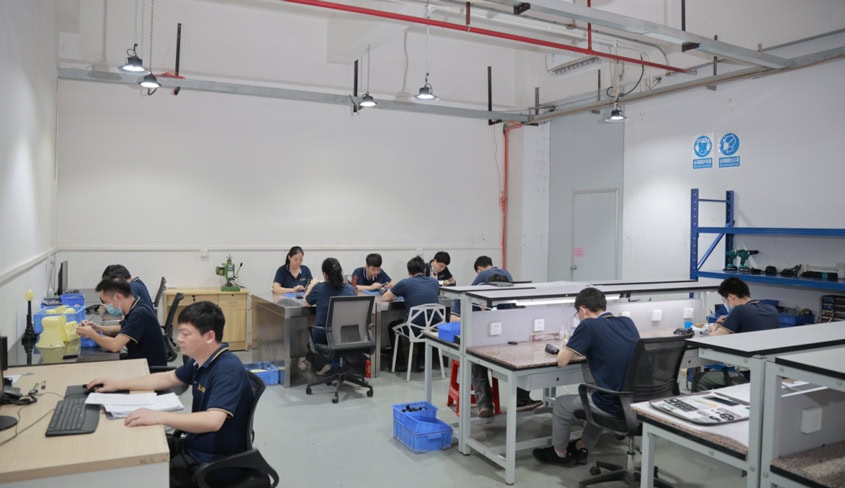
Manual work creates clear plastic parts. Techs smooth each spot carefully. This step cleans away tool marks. Clean parts help your final tests.
VDI TEXTURE AND LASER TEXTURING
Laser tools match precise VDI numbers. Lasers and EDM yield smooth surfaces. They look brighter than sandblasted parts. Shape details change between both methods. LKprototype creates precise textures with machines.
SPRAY PAINTING AND COATING
Pros use smart ways for painting:
Rapid, Sweeping Strokes: Move fast to avoid paint buildup.
Cross-Hatch Application: Use HVLP tools for cross patterns.
Airbrushing: Use air tools for soft coats.
360-Degree Access: Spin parts to cover every side.
Inter-Coat Drying: Wait ten minutes before painting again.
PLATING AND METALLIC FINISHES
PVD tools turn plastic into metal.
PVD Coating Option | Finish / Color Provided | Key Properties & Applications |
|---|---|---|
Titanium Nitride (TiN) | Gold-colored finish | Hard surface, anti-rust, shiny look |
Zirconium Nitride (ZrN) | Champagne-gold finish | Blocks deep scratches, stays stable |
Magnetron Sputtering | Copper, stainless steel, and aluminum finishes | Even layer, strong bond, exact color |
Reactive Arc Deposition | Titanium carbo-nitride (TiCN) | Hard layer stops surface wear |
Custom Color Matching | Range from rose gold to gunmetal | Custom colors match your vision |
EMI-RFI Shielding Coatings | Sputtered metal finishes | Blocks bad signal waves well |
Pick nickel or chrome for strength.
CUSTOM TEXTURE APPLICATIONS
Nice textures mask small flaws easily. Try cool styles using rapid prototyping. 3D prints build tiny mold parts. Make quick parts using vacuum casting services. LKprototype copies master patterns in silicone. For metal, ask for CNC machining services. Smart work makes your build shine. Good tests refine every smooth finish. Rapid prototyping helps your project succeed.
VISUAL VALIDATION AND QUALITY CONTROL
COLOR MATCHING AND DELTA E
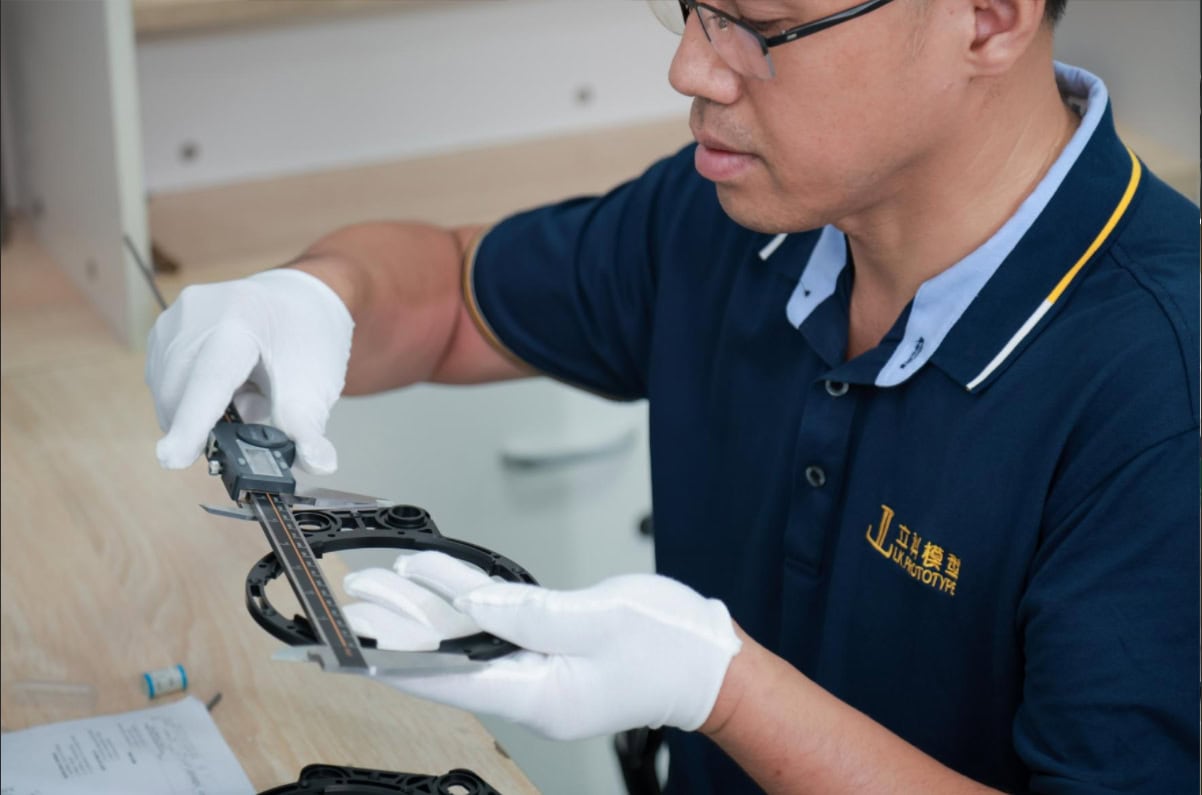
Special tools check real surface colors. You test color gaps with Delta E. Fine electronics need Delta E under 2.0. Pro gear needs tighter Delta E under 1.0. Great models keep your looks spot on.
GLOSS LEVEL MEASUREMENT
Gloss meters test exact surface shine. Tools count light reflection in Gloss Units.
Angle | Initial Reading at 60° | Gloss Classification | Application / Target Finish |
|---|---|---|---|
60° | Baseline setup | Semi-Gloss (10–70 GU) | General finishes (starting point) |
20° | > 70 GU | High Gloss | Highly polished or reflective surfaces |
85° | < 10 GU | Low / Matt Gloss | Low-reflection or textured surfaces |
Good prototypes need real shine checks. LKprototype offers exact shine via CNC machining services.
LIGHT BOOTH INSPECTION
Put parts in light boxes for checks. Special cabinets use six light types. They test your models under varied lamps. Smart builds make this task easy:
D65: Standard daylight for general surface evaluation
TL84: Store light for commercial evaluation
CWF: Cool white fluorescent light for office settings
UV: Ultraviolet light to detect optical brighteners
METAMERISM TESTING
Lamps can shift your true colors. Test your parts to stop color shifts. Use these steps for color control:
Standardize lighting environments with reference daylight lamps.
Utilize precision technology like spectrophotometers to quantify spectral reflectance curves.
Assess samples across daylight, fluorescent, and incandescent lights.
Fast visual work speeds color fixes.
VISUAL QUALITY CHECKLIST
Quality checks guard your whole project. Fast 3d printing tests part shape early. LKprototype uses vacuum casting services for exact 3d models. You finish visual checks with 3d parts. This step leads to smooth factory runs. Top testing helps every single batch win.
COMMON APPEARANCE PROTOTYPE DEFECTS
COLOR SHIFT AND PIGMENT ISSUES
Color shifts happen with wrong pigment mixes. Weak materials break down under high heat. Watch all color numbers during rapid prototyping. Follow basic rules to stop bad shade changes.
SURFACE IMPERFECTIONS
Rough marks ruin outer looks very fast. 3d parts show lines without post-processing. Good rapid prototyping removes these ugly tool lines. Get CNC machining services for smooth parts.
TEXTURE INCONSISTENCY
Bad mold setups cause uneven textures everywhere. Different prototype methods yield different surface feels. Fix texture flaws using vacuum casting services today. Expert techs copy tiny details on parts. Modern setups keep grain depth very even.
Defect Type | Primary Cause | Solution |
|---|---|---|
Color Shift | Poor pigment mixing | Standardize resin blending |
Texture Fade | Worn mold inserts | Replace master patterns |
COATING AND PAINTING DEFECTS
Floating dust ruins fresh wet paint fast. Dirty surfaces cause paint peeling later on. Use clean spray booths for great finishes.
FINISHING QUALITY CONTROL
Quick checks catch visual flaws early on. Rapid prototyping lets teams check each layer. Fix small errors to make perfect samples. 3d printing tools improve overall prototype quality. Smart rapid prototyping helps future factory work.
FROM PROTOTYPE TO GOLDEN SAMPLE APPROVAL
CREATE CMF SPECIFICATION BRIEF
First, write a clear guide for your CMF choices. List each color, finish, and material. This steps helps you avoid big errors. Fast rapid prototyping helps you review ideas quickly. Then, test early 3D printed parts.
T0 SAMPLE REVIEW PROCESS
First factory parts arrive from new molds. Inspect these initial T0 parts closely. Match them against your original CMF rules. Prototyping tools catch small flaws fast. LKprototype builds accurate models using CNC machining services. Their team helps guide your hardware project.
ITERATIVE SURFACE IMPROVEMENT
Tip: Check early parts to keep projects on time.
Fix surface details through several prototype cycles. Good rapid prototyping makes changes super easy. LKprototype provides great vacuum casting services for speed. Improve textures using detailed 3D models. This strategy keeps factory standards very high.
FINAL GOLDEN SAMPLE APPROVAL
Check every detail before mass making begins. Compare final prototype parts to CMF rules. This physical model becomes the main guide. Lock in this approved CMF standard now.
Quality Control Stage | Cosmetic Focus Areas | Verification Method | Documentation & Evidence |
|---|---|---|---|
Cosmetic & Assembly Check | Surface finish, color accuracy, logo/label alignment, legibility, packaging integrity | Direct visual comparison against approved Golden Sample; package drop testing | Multi-angle high-resolution photographs; validated test records |
MASS PRODUCTION TRANSITION
Hand the approved sample to factory crews. Clean design transfers stop weird color shifts. Good rapid prototyping links ideas to factories. New 3D printing tools support fast testing. Maintain high product quality for all batches.
CHOOSING THE RIGHT APPEARANCE PROTOTYPE METHOD
CNC APPEARANCE PROTOTYPES
Computer tools craft realistic models. These automated devices read digital design files. Cut solid plastic or metal blocks easily. LKprototype provides top-tier CNC machining services for projects. Their engineers build accurate physical models. Pick this option when 3d shapes need strength. Machining makes clear parts better than standard printing.
VACUUM CASTING PROTOTYPES
Silicone molds help craft models fast. LKprototype offers expert vacuum casting services for small orders. Mix bright paints right into liquid resin. Vacuum tanks remove air bubbles quickly. This smart method creates smooth parts.
Category | Key Benefits | Primary Limitations |
|---|---|---|
Appearance & Quality | Delivers injection-mold quality; supports diverse post-processing | Shows potential gate marks; tool wear causes sheen variations |
Production & Tooling | Uses low-cost silicone tooling; offers 1–2 week turnaround | Proves inefficient for high volumes; short mold lifespan (~15–20 uses) |
Material & Design | Enables flexible undercuts; accepts custom resin formulas | Limits choice to polyurethanes; lowers accuracy compared to CNC |
Build 3d patterns to make soft molds. This method saves huge factory setup money. However, unit prices jump on large batches.
3D PRINTING APPEARANCE MODELS
Digital tools turn files into real items fast. Choose printers for super tricky shapes. Liquid resin powers SLA and DLP printers.
Stereolithography (SLA) / DLP: Resin printing yields smooth surfaces right away.
Visual Precision: Tiny features help speed up design reviews.
This automated process lowers hard hand labor. Modern printers make early checks very easy.
SELECTING THE BEST PROCESS
Pick your model path using time limits. Every project requires a balanced plan.
Tip: Combine 3d printing speed with vacuum casting resin quality to craft your final product appearance prototype efficiently.
Review each model build choice with care. Use quick prints for fast style checks. Choose machining or casting for factory samples. Smart early choices speed up market wins.
FAQS
WHAT IS AN APPEARANCE PROTOTYPE
An appearance prototype shows your real product design vision. Simple visual traits show off this physical prototype:
Visual form and shape
Surface traits and finishing details
Overall visual presentation
Mix 3d printing and rapid prototyping to test looks. Smart rapid prototyping helps your team stay aligned. This prototype leads hardware development.
WHAT IS CMF IN PRODUCT DESIGN
CMF means color, material, and finish choices. Great cmf design guides user views about quality.
Color picks spark feelings. Material choices show strength. Surface finishes teach users how to hold products.
Use smart cmf design to boost product development. Good CMF choices make users love items.
HOW ARE PROTOTYPE FINISHES CREATED
Makers craft each product appearance prototype using flexible methods. Rapid prototyping shops apply 3d printing tools. They use resin printing, FDM 3d printing, and SLS printing. SLA printing makes smooth surface details easily. Pick CNC machining services for high accuracy. Try vacuum casting services from LKprototype too. Their rapid prototyping process copies detailed parts fast. Modern prototyping methods yield fast results today. Custom prototyping supports your team well. Blend custom 3d printing speed with expert hand polishing.
HOW DO YOU VALIDATE PROTOTYPE APPEARANCE
Run strict validation checks before hardware functional testing. Apply quantitative tools during your careful evaluation:
Measurement Instrument | Target Appearance Metric | Quantitative Specification Unit/Scale |
|---|---|---|
Profilometers | Surface Roughness | Ra and Rz values |
Gloss Meters | Surface Reflectivity | Gloss units at 60° or 85° |
Spectrophotometers | Color Accuracy | L*a*b* coordinates |
This technical testing protects top design quality. Rapid prototyping makes these checks easy.
WHAT IS A GOLDEN SAMPLE
A golden sample acts as your main rapid prototyping benchmark. Check it next to functional testing samples. This approved sample guides future product manufacturing.
You match CMF rules for good designs. Expert surface work helps your models. Strict testing checks every small detail. Early physical models fix mistakes quickly. This plan saves money on tools. You avoid bad tool errors early. Work with LKprototype for fast help. They offer great vacuum casting services. Their CNC machining services help build parts. Set clear CMF guides for teams. Check a golden sample before launch. This step locks in final looks. It protects your true product goals.