LKprototype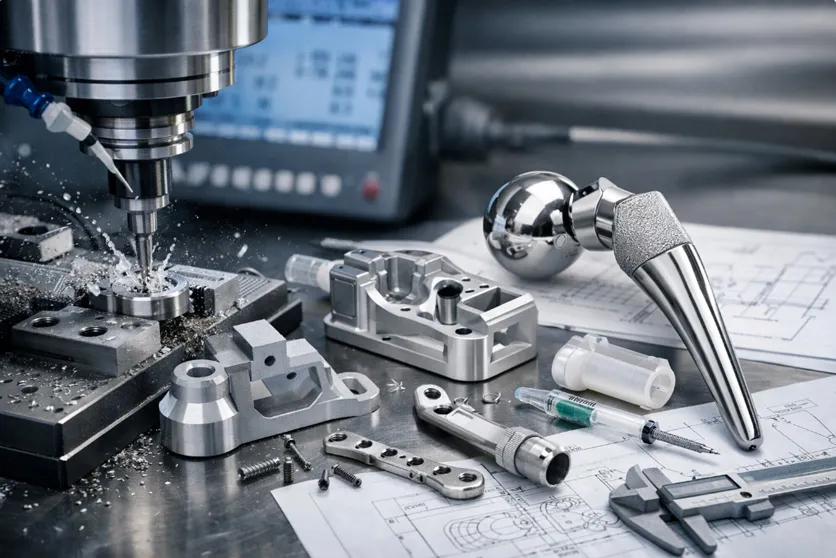
CNC machining medical prototypes help you get very exact parts. These parts have tight tolerances for making medical devices. You can turn your design ideas into real models fast. This makes the process quicker and lets you test early. Rapid prototyping helps you change designs quickly and test them for safety. You can also check how well they work. Customization lets you make implants and prosthetics that fit each patient. This helps patients get better results. Scalable production gives you the same parts every time for tools and devices. This lowers mistakes and makes things work better.
Key Takeaways
CNC machining is very accurate. It helps medical prototypes meet strict rules for safety and how they work.
CNC machining makes prototypes fast. You can change designs and test them quickly. This helps find and fix problems early.
Picking the right materials is important. Medical-grade plastics and metals help make safe and good medical devices.
Following rules like FDA and ISO is needed. This keeps medical prototypes safe and high quality.
CNC machining can make a few or many devices. It also lets you customize medical devices.
Why Precision Matters in CNC Machining Medical Prototypes
Importance of Precision in Medical Device Prototyping
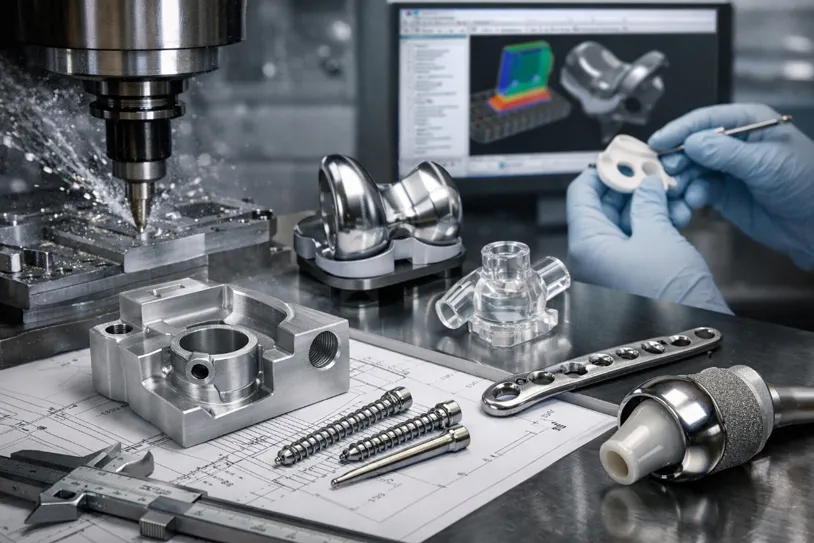
Precision is very important when making cnc machining medical prototypes. You need parts that are exactly right for testing and checking. If you want to see how a device works, your parts must match your plans. Tight tolerances, like ±0.002" (±0.051 mm), make sure your prototypes act like the real thing. For surgical instruments, the size must be perfect so you can test them in real life. Diagnostic devices need to be shaped just right so you can trust their results.
Functional testing and clinical validation needs
You have to use prototypes to see how devices work. Accurate parts show if your design is good in real life. You can find problems early and fix them before making the final device.
Risk reduction in early-stage medical designs
Using cnc machining medical prototypes helps lower risks. Exact parts help you find mistakes before they reach patients. You can change your design fast and stop expensive errors.
How High Precision Is Achieved in Medical CNC Machining
Machine accuracy and repeatability
Modern CNC machines are very accurate and do the same thing every time. You can make many of the same part with no mistakes. Machines use smart controls to keep every cut just right.
Tooling selection and process control
Special tools help you make small details and sharp corners. You can use high-speed machining to make tiny channels and keep things cool. In-process checks look at each step, so you know your parts are still right. Picking the best materials, like medical-grade aluminum or polycarbonate, also helps you get the precision you need.
Tip: Always check your steps and tools to keep your prototypes correct.
Impact of Precision on Patient Safety and Device Performance
Precision keeps medical devices safe and working well.
Custom implants fit just right, so you avoid pain or rejection.
Making the same parts every time helps you follow medical rules and keep people safe.
Devices must work inside the body, so strong and exact parts are important.
Tight tolerances in surgical tools help doctors do careful work.
Quality checks at every step make sure your prototypes are good enough.
When you focus on precision in cnc machining medical prototypes, you help patients and lower risks.
Typical Tolerances in CNC Machining for Medical Prototypes
Common Tolerance Requirements for Medical CNC Parts
You need to know what tolerance your parts need. Tolerance is how close the part size is to your plan. Medical devices must fit and work just right. The table below shows common tolerance levels:
Tolerance Level | Measurement |
|---|---|
General CNC Machining | ±0.10 mm (±0.004 in) |
Standard Precision CNC Machining | ±0.05 mm (±0.002 in) |
Tight Tolerance Machining | ±0.01 mm (±0.0004 in) |
Standard tolerances for plastic medical prototypes
Plastic parts often use standard precision tolerances. These are usually about ±0.05 mm (±0.002 in). This works well for covers, housings, and simple parts. You can test your ideas fast and change them if needed.
Tight tolerances for metal medical components
Metal parts need even tighter tolerances. These can be as small as ±0.01 mm (±0.0004 in). Tight tolerances help make surgical tools and implants fit perfectly. You can trust these parts to work inside the body and keep people safe.
CNC Techniques for Achieving Tight Tolerances
Special CNC machining techniques help you get tight tolerances. These methods make sure your parts match your design.
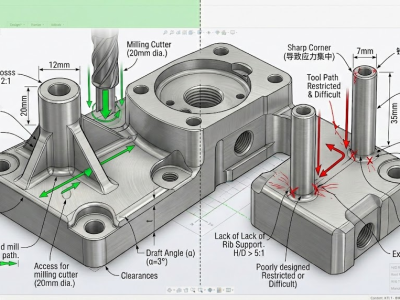
Multi-axis CNC machining cuts parts from many angles. You can make complex shapes and keep details correct.
Temperature and vibration control keeps machines steady. This stops mistakes from heat or shaking.
Tight tolerance CNC machining can reach ±0.001 inches (±0.0254 mm) or better.
Precision manufacturing can reach ±0.0001 inches (±0.0025 mm) for important uses.
Modern CNC machining can get tolerances as tight as ±0.0005 inches. Some special methods can reach 1-5 microns.
Top companies keep tolerances of 1-3 microns for medical device parts.
Tip: You can use these advanced methods to make sure your cnc machining medical prototypes meet strict medical rules.
CNC machining in medicine gives you high accuracy and reliability. You can make parts that work well in many situations. This matters for devices that must fit and work inside the body.
Quality Control Methods for Precision Medical Parts
You must check your parts at every step to meet tolerance needs. Quality control helps keep your parts safe and reliable.
Quality Control Method | Description |
|---|---|
Quality Management System (QMS) | A system that makes sure you follow rules. |
Process Validation | Shows CNC machining meets needs with different checks. |
Document Control | Keeps track of papers to follow cGMP rules. |
Training Requirements | Makes sure workers are trained and records are kept. |
Material Traceability | Tracks materials from start to finish for safety. |
Supplier Quality Management | Checks suppliers and audits them for quality. |
Nonconformance Management | Handles problems in making parts to keep rules. |
Corrective and Preventive Action (CAPA) | Stops problems from happening again using risk checks. |
In-process inspection
You can check your parts while making them. In-process inspection helps you find mistakes early. You use tools like calipers, micrometers, and vision systems to measure parts as they are made.
Final dimensional verification
You must check your parts one last time before using them. Final dimensional verification uses very accurate measuring machines. You make sure every part matches your plan and meets tolerance needs.
Note: Quality control keeps your medical parts safe and ready for testing or use.
Materials Used in CNC Machining Medical Prototypes
Common CNC Materials for Medical Prototyping
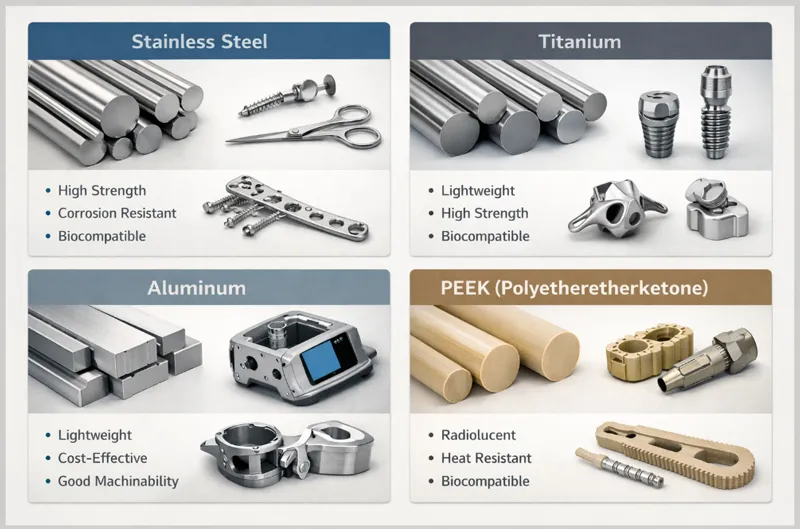
You have to pick the right materials for cnc machining medical prototypes. Medical devices use plastics and metals. Each material has special things that help your prototypes work well.
Medical-grade plastics (PEEK, PTFE, ABS, Nylon)
Medical-grade plastics are strong and can bend without breaking. PEEK is very strong and does not get hurt by chemicals. PTFE also fights chemicals and works in tough places. ABS and Nylon are tough and easy to shape. You can use these plastics for covers, connectors, and parts that move.
Medical metals (Stainless steel, Titanium, Aluminum)
Metals like stainless steel and titanium make strong and safe prototypes. Stainless steel does not rust and is simple to clean. Titanium is light but strong and safe for the body. Aluminum is not heavy and is easy to cut. You can use these metals for tools and implants.
Material Type | Key Properties |
|---|---|
Great at fighting rust, safe for the body, strong, easy to cut. | |
Stainless Steel 17-4 PH | Very strong and hard, fights rust, good for tools. |
Titanium Alloy Grade 5 | Light but strong, safe for the body, fights rust. |
PEEK | Very strong, fights chemicals, can be seen in x-rays, good for implants. |
Ultem | Strong, stiff, fights chemicals, can be cleaned many times. |
Delrin | Strong, stiff, smooth, keeps its shape, good for moving parts. |
Medical-grade Polycarbonate | Clear, tough, stiff, good for covers and connectors. |
Biocompatible Materials for Medical CNC Machining
You must use biocompatible materials for prototypes that touch the body. These materials keep people safe and help you follow medical rules.
Materials suitable for functional and pre-clinical testing
Titanium, stainless steel, and cobalt-chrome are safe for implants and tools. Acrylic, PE, PU, and PET are safe plastics. You can use these for tests and early device checks.
Material Type | Properties | Standards Met |
|---|---|---|
Titanium | Not harmful, safe for the body | |
Stainless Steel 316L | Not harmful, lasts a long time | USP Class VI certified |
Titanium Grade 5 | Not harmful, strong | USP Class VI certified |
Cobalt-Chrome (CoCr) | Safe for the body, good for implants | USP Class VI certified |
Acrylic | Safe plastic | Can be cleaned |
PE | Safe plastic | Can be cleaned |
PU | Safe plastic | Can be cleaned |
PET | Safe plastic | Can be cleaned |
Material traceability and certification
You need to keep track of materials from start to finish. Certification shows your materials meet rules like USP Class VI. This helps you pass checks and keeps your prototypes safe.
How to Select the Right Material for Medical Prototypes
You must think about many things when picking materials. These things help your prototypes work well and follow the rules.
Follow FDA or ISO rules.
Make sure the material is safe for the body.
Pick materials that are strong enough.
Make sure the material can handle heat when cleaned.
Check if the material is safe for electric uses.
Tip: Always check if your material can be cleaned and meets medical rules.
You can make better choices for your prototypes when you know these things.
Compliance and Quality Standards for Medical CNC Prototypes
Regulatory Requirements in Medical Device Prototyping
You have to follow many rules when making medical device prototypes. These rules protect patients and make sure devices work right. In the United States, the FDA Quality System Regulation (QSR) says you need a design control system. In Europe, the Medical Device Regulation (MDR) and In Vitro Diagnostic Regulation (IVDR) set their own rules. Both the FDA and the EU put medical devices into groups by risk. The EU splits Class II into Class IIa and Class IIb. You need to know what group your device is in.
FDA Quality System Regulation (QSR)
ISO 13485 for quality management
MDR and IVDR for European devices
You must meet these rules to sell your device in the United States or Europe. The FDA has special rules, and the EU wants a CE mark on your device.
ISO 13485 considerations
ISO 13485 is a guide for making safe medical devices. You need a quality management system for every step. This covers design and making the device. The standard helps you keep your process under control. It also helps you keep good records. You must follow ISO 13485 if you want to meet world rules.
ISO 13485 makes sure devices are safe and work well.
You must use CAD and CNC systems that follow these rules.
FDA Quality Management System Regulation (QMSR) uses ISO 13485 as a base.
FDA and EU MDR relevance at prototype stage
You must think about FDA and EU MDR rules even for prototypes. The FDA wants you to keep records and use design controls. The EU MDR checks if your device is safe and works well. You must show your prototype meets these rules before making lots of them.
Tip: Start following FDA and EU MDR rules early. This helps you avoid problems later.
Quality Management Systems in Medical CNC Machining
You need a strong quality management system for cnc machining medical prototypes. This system keeps your process safe and your records clear. ISO 13485 makes you use strict controls and write down every step. You must check each step and keep records for every part.
ISO 13485 compliance matches CNC work with medical quality systems.
You must control your process and keep all documents.
Micron-level tolerances are important for patient safety.
Process documentation and traceability
You must write down every step you take. This shows how you made each part. You need to keep records of materials, tools, and checks. Traceability lets you follow each part from start to finish.
Step | What You Record |
|---|---|
Material Selection | Source, batch, certification |
Machining Process | Settings, tools, operator |
Inspection | Measurements, results |
Final Product | Serial number, test reports |
Risk management during prototyping
You must look for risks when making prototypes. You need to find problems early and fix them fast. Risk management keeps your process safe and your parts good. You must check your design, materials, and machining steps.
Note: Good risk management keeps your prototypes safe and helps you meet medical rules.
Documentation Needed for Medical CNC Prototype Projects
You must keep clear records for every project. These records show you followed the rules and made safe parts.
Process control records
Quality inspections
Final product reports
You need these papers to prove your parts are safe and can be tracked. You must show how you made each part and checked it. This helps you pass audits and sell your device.
Callout: Keep your records organized. This makes audits easier and helps you fix problems fast.
You must follow these rules and keep strong records when making cnc machining medical prototypes. This helps you meet world standards and keeps patients safe.
Advantages of CNC Machining for Medical Device Prototypes
Rapid Prototyping with High Accuracy
CNC machining lets you make medical prototypes fast and accurately. You can turn your digital designs into real parts in just days. You do not have to wait for molds or special tools. You can test your ideas quickly and change them right away. CNC machines cut parts exactly as you planned. This means you get reliable results every time. You can check how your device works and improve it before making the final product.
Tip: Making prototypes quickly helps you find problems early. You can fix them before they become expensive mistakes.
Customization and Design Iteration Flexibility
CNC machining lets you change your designs as much as you want. You can update your CAD files and send them to the machine for new parts. You do not need to pay for costly molds, so you save money each time you change something. You can try different shapes and materials to see what works best. The table below shows how CNC machining helps you with customization and design changes:
Evidence Point | Description |
|---|---|
Rapid Iteration | You get parts faster than waiting for molds or tools. |
You do not need expensive molds, so you spend less money upfront. | |
Design Flexibility | You can test new shapes and materials quickly with updated files. |
Scalability from Prototype to Low-Volume Production
You can make one prototype or hundreds of parts with CNC machining. This process keeps the quality high for every part. You can make custom implants, surgical tools, and device parts in small batches. The medical industry needs precision and safety, and CNC machining gives both. Here are some ways CNC machining helps with scalability:
You can make small or large amounts with the same quality.
Custom implants and prototypes are easy to make for medical needs.
You can do quick changes while meeting strict medical standards.
Small batch production is great for surgical tools and diagnostic equipment.
Cost and Lead Time Benefits Compared to Other Methods
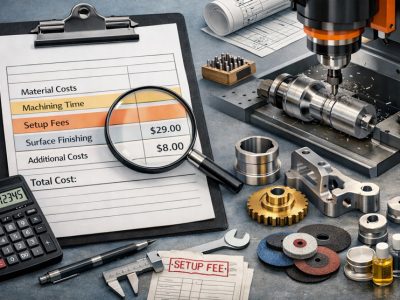
CNC machining saves you money and time compared to other methods. You do not pay for molds or setup fees. You can start making parts right away and get them faster. This helps you bring your medical device to market sooner. You can use cnc machining medical prototypes to test your ideas without spending too much. Many companies, like LKprototype, offer fast and reliable CNC machining services for medical devices. You can learn more about their services here.
Note: Lower costs and shorter wait times help you stay ahead in medical device development.
CNC Machining vs Other Prototyping Methods for Medical Devices
CNC Machining vs 3D Printing for Medical Prototypes
You might have to pick between CNC machining and 3D printing. Both ways help you make parts fast, but they are different.
Accuracy and surface finish comparison
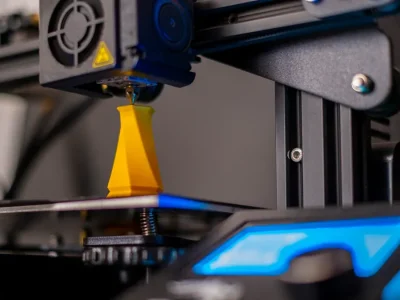
CNC machining makes very exact parts with smooth surfaces. You can get tight tolerances, which is important for medical devices. 3D printing can make tricky shapes, but the surface is not always smooth. You might see lines or rough spots. The table below shows how they are different:
Factor | CNC Machining | 3D Printing |
|---|---|---|
Best For | High-precision, metal parts | Complex shapes, fast changes |
Material Options | Metals, plastics, composites | Plastics, resins, some metals |
Surface Finish | Smooth, some machining marks | Layer lines, stairstepping |
Tolerances | ± 0.001″–0.005″ | ± 0.004″–0.02″ |
Tip: Pick CNC machining if you need smooth and exact parts.
Material limitations
CNC machining works with many materials, like metals and special plastics. 3D printing mostly uses plastics and resins, but sometimes metals. You can use CNC machining medical prototypes for real tests and use.
CNC Machining vs Injection Molding for Early-Stage Prototypes
You may want to know how CNC machining is different from injection molding. CNC machining gives you parts fast and lets you use safe materials. Injection molding needs pricey molds and is better for making lots of parts. The table below shows the main differences:
Aspect | CNC Machining | Injection Molding |
|---|---|---|
Speed | Days | Weeks |
Cost | Higher per-part, no tooling | High tooling, low per-part after setup |
Material Compatibility | Wide range, biocompatible | Thermoplastics |
Production Volume | Low-volume (under 500) | High-volume (thousands) |
Surface Finish | Smooth, can polish | Textures possible |
Regulatory | Used for verification | Consistency for validation |
Note: CNC machining is good for testing and checking your designs before making a lot.
When CNC Machining Is the Best Choice for Medical Prototyping
You should pick CNC machining when you need very exact parts, strong materials, and fast changes. This way works well for dental implants, tools for surgery, and custom prosthetics. You can use safe materials and make parts that fit each person. CNC machining gives you a good mix of accuracy, material choices, and speed.
Make dental implants that fit and work well.
Use safe materials for testing.
Create custom implants and prosthetics.
CNC machining gives you parts you can trust and helps you follow medical rules.
Typical Applications of CNC Machined Medical Prototypes
Surgical instruments and tools
CNC machining helps make tools like scalpels, forceps, and clamps. These tools must be very exact for doctors to use safely. Every tool is made to match the design perfectly. This means each one is the same for every surgery. Hospitals use CNC machining to make thousands of these tools. The tools must meet strict rules. The materials used do not rust or get damaged by heat. This helps the tools last longer and stay safe when cleaned.
Scalpels
Forceps
Clamps
Surgical tools need to be very accurate and the same every time. CNC machining makes sure you get safe and reliable tools for each surgery.
Diagnostic device components
CNC machined parts are used in devices like MRI scanners, CT scanners, lab analyzers, and testing machines. These parts must be made to very tight sizes and follow FDA rules. CNC machining gives you parts that can be cleaned many times and still work well. These devices need to be very exact and strong to give good results.
Device Type | CNC Machined Component Role |
|---|---|
MRI Scanner | Structural and functional parts |
CT Scanner | Precision assemblies |
Laboratory Analyzer | Sample handling and measurement |
Point-of-Care Device | Housing and internal mechanisms |
Tight sizes help keep parts precise.
Materials must be safe for medical use.
Parts can be cleaned over and over.
Medical device housings and enclosures
CNC machined housings protect the electronics inside medical devices. These covers keep water and electric signals away from important parts. You can make special housings for monitors, control panels, imaging machines, respirators, and ventilators. CNC machining lets you change designs fast and make new devices quickly. Strong housings last in hospitals and can be cleaned many times.
Diagnostic imaging equipment shells
Respirator and ventilator covers
EMI-shielded enclosures
CNC machined covers keep your devices safe and working well, even in tough places.
Functional testing and validation parts
CNC machining medical prototypes are used for testing and checking if devices work. Making prototypes quickly helps you test and fix problems fast. Custom parts fit together the right way, which is important for good tests. Reliable parts help you check your design before making lots of them. CNC machining lets you test and improve your device many times before final production.
Fast prototyping saves time.
Custom parts fit well for testing.
Accurate parts help you make better designs.
Faster testing and checking means you can give safer medical devices to patients sooner.
Conclusion: Why CNC Machining Remains Critical for Medical Prototypes
Summary of precision, materials, and tolerance advantages
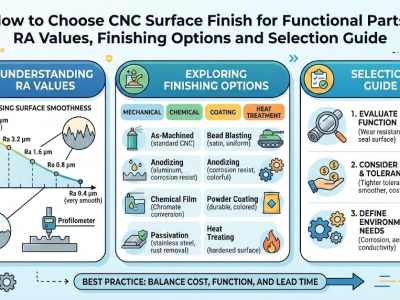
You need a method you can trust for medical prototypes. CNC machining helps you make parts with very tight tolerances. This means you do not need to fix parts much after making them. It also lowers the chance of mistakes. You can count on your parts to fit and work right. CNC machining is special because it cuts down on human mistakes. It follows your design exactly. You can get very precise parts, even matching DIN ISO 2768 M (F) standards. The surface can be very smooth, as fine as Ra 0.4μm. This smoothness is important for safety and how well things work. You can pick from many materials, like plastics, composites, or strong metals. This lets you choose what your device needs, like strength or flexibility. Tight tolerances make sure your prototype acts like the real thing. This is very important in medicine.
How CNC machining supports safer and faster medical innovation
CNC machining medical prototypes help you go from an idea to a real product fast and safely. You can make tricky and exact parts for things like pacemakers or orthopedic implants. These parts must follow strict size and shape rules. You can also make and test your prototypes quickly. This helps you finish on time and get new devices to market faster. CNC machining meets high safety and certification rules. This means your prototypes are safe for testing and use.
When you use CNC machining, you help keep patients safe and push medical ideas forward. You can trust this way to give you the quality and speed you need in today’s fast-changing medical world.
You get lots of good things from using CNC machining for medical device prototypes. The parts are made very exact and fit just right. You can pick strong materials that are safe to use. CNC machining lets you test your designs fast and find problems before you spend too much money.
Better testing means you can check your ideas quickly.
Saving money helps you stop big mistakes from happening.
Working together is easier because you can share ideas fast.
CNC machining helps make new answers for medical problems. You help make safer devices and help patients feel better.
FAQ
What is the typical lead time for CNC machined medical prototypes?
You can get CNC machined medical prototypes in 3 to 7 days. The time it takes depends on how hard the part is to make and what material you pick. Rapid prototyping lets you try out your designs fast.
Which materials can you use for medical CNC prototypes?
You can use medical-grade plastics like PEEK, PTFE, ABS, and Nylon. Metals such as stainless steel, titanium, and aluminum are used a lot too. These materials are safe and work well with the body.
How precise are CNC machined medical parts?
CNC machines can make parts as exact as ±0.01 mm. High-precision machines help your prototypes look just like your design. This accuracy makes medical devices safe and dependable.
Do you need special certifications for medical CNC prototypes?
You have to follow ISO 13485 and FDA rules. These certifications make sure your parts are safe and high quality. Keeping good records and using approved materials helps your prototypes pass checks.