LKprototype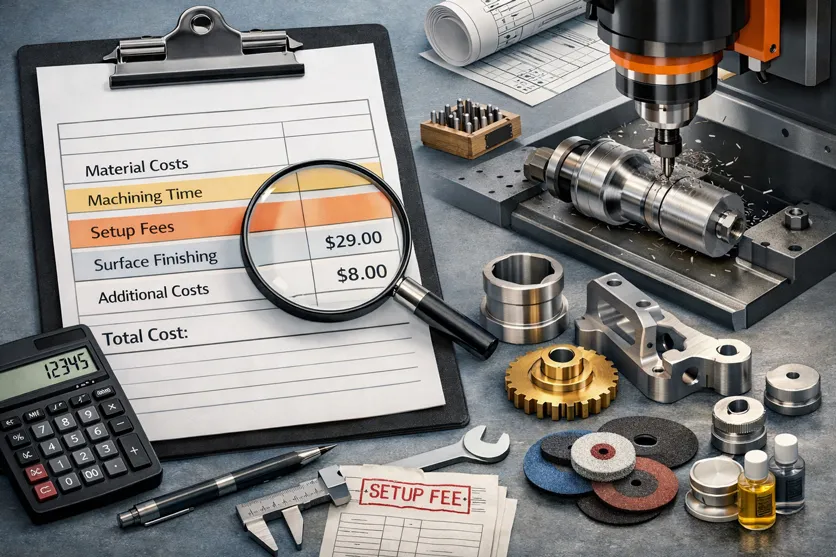
You want to know every detail in your cnc machining quote breakdown so you can make good choices. Each line in your quote changes your budget and your project’s success. Many buyers have problems like price changes from supplier skills, the hard quoting process, and not understanding job details. When you learn how to read each part of your quote, you get clear costs and more control. A simple plan helps you stop surprises and make better choices.
Key Takeaways
Look at each line in your CNC machining quote. This shows you how your money is spent and helps you avoid extra costs.
Check the cost breakdown closely. Try to find ways to save, like using less machine time or making designs easier.
Ask your supplier about material costs and any extra charges. Knowing this lets you compare quotes and pick the best one.
See if your quote has value-added services. These can make your project better and sometimes explain higher prices.
Always look at quotes from different suppliers. This helps you choose the best price, quality, and service.
What Is a CNC Machining Quote and Why It Matters
What Information Is Included in a CNC Machining Quote
When you ask for a cnc machining quote, you get a detailed list of what goes into making your part. This list helps you see where your money goes. You will find several main parts in a typical cnc quote:
Raw material
Machine time
Tooling
Setup
Overhead
Labor
Each part shows a piece of the total cost. For example, the raw material line tells you how much the metal or plastic costs. Machine time shows how long the cnc machine will run for your job. Tooling covers the special tools needed to shape your part. Setup means the time workers spend getting the cnc machine ready. Overhead includes things like electricity and shop space. Labor is the work people do to keep everything running. When you look at each line, you can see how the cost adds up.
Tip: Always check if your cnc quote lists every step. Missing details can lead to surprise costs later.
Why Engineers and Buyers Should Review Quotes Line by Line
You need to check each line in your cnc machining quote. This helps you understand the cost structure and make smart choices. When you review every part, you can spot areas where you might save money. For example, you may notice that machine time is high because your design is complex. You can talk with your cnc supplier about ways to make the part easier to machine.
Looking at each line also helps you see how every choice affects the final cost and the quality of your part. You build better communication with your cnc partner when you ask questions about the quote. This leads to more trust and fewer mistakes. When you know what each line means, you control your project and your budget.
CNC Machining Quote Breakdown Structure
Overview of a Typical CNC Machining Quote
When you get a cnc machining quote, it is a clear document. It helps you see every part of your project. Each section gives you key facts about your cnc machined parts. Here is a table that shows what you usually find in a normal quote:
Section | Information Included |
|---|---|
Part Identification | Name or ID of the part, quote number, date, supplier details, and quantity |
Material Specifications | Type of material, shape, and size |
Labor, machine time, tooling, post-processing, and quality checks | |
Value-Added Services | DFM analysis, project management, logistics, and packaging |
You can use this setup to compare different suppliers. You can also check if your quote covers all the steps for your cnc project.
Understanding Quote Line Items
You should look at each part of your cnc quote as a group of line items. These line items show you where your money goes. Here is what you will see in most cnc machining quotes:
Part identification and project overview
Material specifications
Cost breakdown (labor, machine time, tooling, post-processing, quality control)
Value-added services (DFM analysis, project management, logistics)
Each line item gives you a simple view of the cnc process. You can see which steps cost the most. You can also see which services help your project do well.
How to Read a CNC Machining Quote
Reading a cnc machining quote means checking each cost type and knowing what you pay for. Use this table to help you:
Cost Category | Description |
|---|---|
Setup Fees | One-time charge for machine setup, fixture installation, and first-article checks |
Material Costs | Price for raw stock, including waste from subtractive cnc manufacturing |
Machining Time | Charges based on machine hours, affected by part shape and material |
Finishing Operations | Extra cost for processes like anodizing or plating |
Shipping and Handling | Cost for packaging, shipping, and customs if needed |
You should always ask your supplier if you see charges you do not understand. This helps you avoid hidden costs. It keeps your cnc project moving forward. For more details on cnc machined parts and services, visit our CNC machined parts service page.
Key Cost Drivers in CNC Machining Quotes
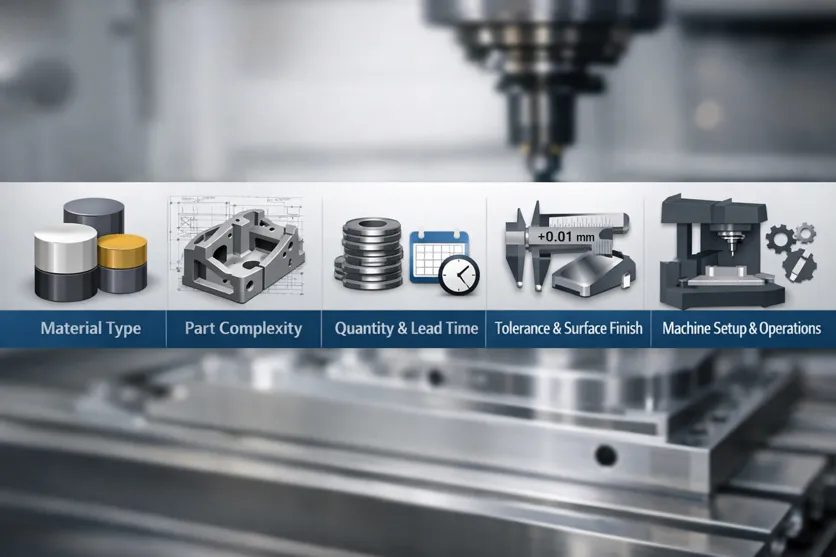
If you know what makes your cnc quote cost more, you can make better choices. Every step in the process adds to the price. This knowledge helps you find ways to save money and avoid surprises.
Material Cost and Supplier Markup
Material cost is one of the first things you see in a cnc quote. The material you pick changes the price a lot. Aluminum is cheaper and easy to work with. Stainless steel costs more because it is harder to cut. Titanium is the most expensive. You also pay for the waste made when the cnc machine cuts your part. Suppliers may add extra charges for handling and storage.
Tip: Ask your supplier to show you the material cost and markup. This helps you compare quotes and get the best deal.
Setup and CNC Programming Fees
Setup fees pay for getting the cnc machine ready for your job. This includes putting in tools, fixtures, and running test parts. Programming fees pay for the expert who writes the cnc code. These costs are usually paid once. They can be high for small orders because the setup work stays the same.
Setup fees often cover:
Getting the machine ready
Installing fixtures
Checking the first part
Machining Time and Labor Costs
Machining time is the biggest cost in most cnc jobs. The machine, operator, and tools all work together to make your part. If your design is hard, the machine runs longer. Even small changes in design can cut machining time and save money. Labor costs pay for the worker’s time and skill.
Cost Driver | Description |
|---|---|
Machining Time | Time the cnc machine spends making your part |
Operator Labor | Time the worker spends setting up and running the machine |
Tooling, Post Processing, and Overhead
Tooling means the special tools needed for your part. Some jobs need custom tools, which cost more. Post processing includes extra steps like anodizing or coating. Overhead covers things like electricity, shop space, and quality checks. These costs keep the cnc shop running and affect your final price.
Common overhead items:
Utilities for the shop
Quality checks
Maintenance
When you know these key cost drivers, you can read your cnc quote with confidence. You can ask good questions and find ways to save money on your next project.
CNC Machining Cost Breakdown Explained
Material Selection and Its Impact on Cost
When you pick a material, you set the starting price for cnc machining.
Material cost is the first thing you can measure in a CNC machining quote. It often decides the main price.
Material details change both the price and how easy it is to machine. Softer metals like aluminum are easier and faster to cut. Harder metals like titanium and stainless steel cost more. They need more time and special tools. Material costs usually make up 20-40% of the total price for cnc machined parts. If your part is simple, material costs matter most. If your part is complex, labor and machine time matter more.
Material Type | Cost Impact | Machinability |
|---|---|---|
Titanium | High | Difficult |
Aluminum | Low | Easy |
You can compare materials to see which saves money:
Material | Machinability | Cost-Effectiveness | Notes |
|---|---|---|---|
Aluminum | High | Cost-effective | Lightweight, corrosion-resistant |
ABS | Moderate | Affordable | Good for prototyping |
Titanium | Low | High | Exceptional strength, expensive |
Machine Time and Cycle Time Factors
Machine time is a big part of cnc machining prices. Longer machine times use more energy, labor, and tools. Harder materials and tricky shapes take more time to make.
Longer cycle times make machines less efficient and raise idle time. This makes costs go up.
More machining time means higher energy and labor costs for each part.
Longer machine runs can wear out tools faster, so tooling costs rise.
Cnc machine hourly rates are different:
Machine Type | Typical Hourly Cost (Global Average) |
|---|---|
3-Axis CNC Milling | $30–$60 |
4-Axis CNC Milling | $40–$75 |
5-Axis CNC Milling | $60–$120 |
CNC Turning | $25–$55 |
EDM Wire Cutting | $40–$90 |
EDM Sinking | $50–$110 |
Complexity and Tolerance Requirements
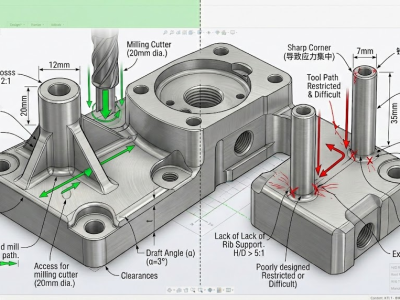
Your design choices change cnc machining costs. Tight tolerances slow down machining and cause more scrap. Complex shapes need custom fixtures and special tools.
Tight tolerances slow down the machine, so cycle time goes up.
Scrap rates get higher because parts can drift from the right size.
More inspection time is needed, which adds to the cost.
Complex shapes need custom fixtures and special tools, so costs go up.
To keep costs low:
Use tight tolerances only for parts that fit together or need to work.
Use standard tolerances for other areas.
Make tolerances bigger if looks matter more than function.
Do not use many tight tolerances in one assembly.
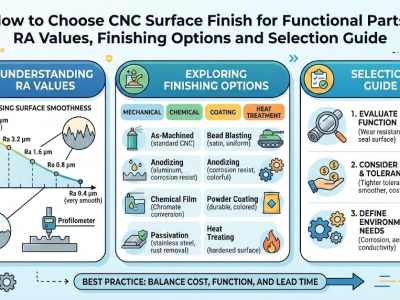
Surface Finishing and Secondary Operations
Surface finishing and extra steps change cnc machining prices.
Surface finish needs can raise manufacturing costs and make processing harder. Picking the right surface finish for what your part does can stop extra steps. This helps control the total price.
Finishing Process | Cost Implications |
|---|---|
Anodizing | Cosmetic anodizing can cost more than functional anodizing for corrosion resistance. |
Powder coating | Needs more handling time and quality checks. |
Bead blasting | Sometimes needs outside help to finish. |
Polishing | Needs masking for surfaces. |
Heat treatment | Makes processing harder and costs more. |
Laser engraving | Needs special tools and longer quality checks. |
Finishing costs depend on:
The surface area of the parts
How tricky the steps are
Cosmetic needs
Coating thickness
You can change your design and material choices to control cnc machining costs. This helps you get the best mix of quality and price.
Example of a CNC Machining Quote Breakdown

Sample Quote Line Items Explained
When you get a cnc machining quote, it has many line items. Each line shows what you pay for. Here is an example table:
Line Item | Description | Typical Cost Impact |
|---|---|---|
Material | Type and amount of raw material used | Varies by material |
Setup Fees | Machine preparation and programming | One-time charge |
Machining Time | Hours spent cutting and shaping | Largest cost driver |
Labor | Operator and programmer wages | Depends on skill level |
Tooling | Special tools or fixtures needed | Extra for custom tools |
Finishing | Surface treatments like anodizing or plating | Adds to total cost |
Overhead | Shop expenses, quality checks, utilities | Included in each part |
Shipping | Packaging and delivery | Based on location |
You can see how each line changes the total price. Material and machining time are usually the biggest costs.
How Different Cost Factors Affect Pricing
Many things can change the price of cnc machining. Some materials, like aluminum, are easy to cut. Others, like titanium, are harder and cost more. Labor cost depends on how skilled the workers are and how long they work. Overhead means using machines and doing extra steps like heat treatment. If your part is complex, it needs special tools and more time, so the price goes up. Setup costs do not change, so making more parts lowers the cost for each one. Prototype parts cost more because each job needs setup and programming.
Cost Factor | Description |
|---|---|
Material | Some materials are easier to cut and shape than others. Aluminum is fast to machine because it handles heat well. Harder materials like titanium take more time to cut, increasing costs. |
Labor | Labor costs include paying workers and programmers, which varies based on skill and hours worked. |
Overhead | Overhead costs can include the use of advanced machines, which are more expensive per hour, and additional steps like anodizing or heat treatment that add to the overall price. |
Complexity of Part | Simple parts are cheaper to produce, while complex designs require special tools and more time, raising costs. |
Setup Costs | Setup costs remain constant, so producing larger batches can reduce the cost per part. |
Prototyping vs. Production | Prototype parts are more expensive due to the need for setup and programming, while production parts benefit from lower costs per unit as fixed costs are spread over more items. |
Tip: Ask your supplier to tell you how each cost factor changes your quote. This helps you know where you can save money.
Comparing Multiple CNC Quotes
You should always look at quotes from different cnc suppliers. This helps you find the best deal for your project. Here are some good tips:
Get quotes from a few trusted vendors to check prices, lead times, and services.
Look at each quote closely to see what is different and ask for better terms.
Pick a supplier with clear prices who meets your needs.
Check for certifications like IATF 16949 or AS9100 for better quality.
Remember, suppliers may have different prices for the same part because of machine rates and overhead.
When you compare quotes, you get more control. You can pick the supplier who gives you the best price, quality, and service.
How to Optimize and Reduce CNC Machining Costs
Identifying High Impact Cost Drivers
You can spend less on cnc turning if you focus on the main cost drivers. When you look at a cnc quote, check these important things:
Runtime estimation
Setup time
Material pricing
Tooling costs
Quality control
Overhead rates
Risk factors
These items change your cnc turning costs the most. If you know about them, you can make smart choices to save money. You can ask your supplier about each one and see where you can spend less. This helps you keep your budget safe and make better parts.
Design Changes That Reduce Machining Cost
You can change your design to save money and make cnc machining better. The table below shows how different ideas change price and quality:
Strategy | Impact on Costs |
|---|---|
Simplifying geometry | Makes machining faster and tools last longer, so costs go down. |
Optimizing tolerances | Stops using tight tolerances that take more time and checking. |
Minimizing setups | Cuts down on time when the machine is not cutting and lowers mistakes. |
Material and blank choices | Picking better alloys or blank sizes saves money and makes machining easier. |
Surface finish adjustments | Making finish rules easier means less extra work and checking, so costs drop. |
You can make part shapes simpler, use normal tolerances, and pick materials that are easy to cut. These changes help you stay on budget and make good parts.
Strategies for Negotiating and Customizing Quotes
You can use different ways to get better cnc prices and save money. Start by talking to your supplier about making your design simple. Simple shapes and easy tolerances can lower machining time and cost. Pick materials that fit your budget and do not waste much. Ask about ways to make the process better, like using smart machine paths or machines that do more than one thing. Making more parts at once spreads setup costs, so each part costs less.
Tip: Always check labor and machine time, extra steps, and overhead with your supplier. This helps you find more ways to save and make better parts.
When you use these ideas, you get better prices, higher quality, and more control over your cnc turning costs. You can reach your goals and keep your budget safe.
You can look at CNC machining quotes one step at a time by doing these things:
Make sure you know the part name and project details.
Check what materials will be used.
- Look at how the costs are split up.
See if there are any extra helpful services.
To save money and get good quality, pick materials that do not cost too much, use the right tools, and make your design easy to machine. Always ask for quotes that show all the details and talk often with your suppliers. This way, you can see where your money goes and get the best outcome for your project.
FAQ
What is a cnc machining quote breakdown?
A cnc machining quote breakdown lists every cost in your project. You can see costs for material, setup, machining, and finishing. This helps you know where your money goes. It also lets you compare different suppliers.
How do you lower cnc turning cost?
You can lower cnc turning cost by making your part design simple. Pick materials that are easy to machine. Ask for a clear cnc machining quote breakdown. Order more parts at once to lower setup costs. Check each cnc turning quote to find savings.
Why do cnc turning cost and cnc turning pricing change between suppliers?
Cnc turning cost and cnc turning pricing change because shops use different machines and labor rates. Some shops have faster machines. Others charge more for setup or finishing. Always look at the cnc machining quote breakdown to see all costs.
How do you compare a cnc turning quote from different shops?
You compare a cnc turning quote by looking at each line item. Check the costs for material, setup, machining, and finishing. Ask for a cnc machining quote breakdown. This helps you see why cnc turning cost is higher or lower at each shop.
What details help you get an accurate cnc part cost estimate?
You get a better cnc part cost estimate by giving clear drawings and material choices. Tell the supplier your tolerance and finish needs. Share how many parts you want. This helps suppliers give you a detailed cnc machining quote breakdown and a fair cnc turning quote.