LKprototype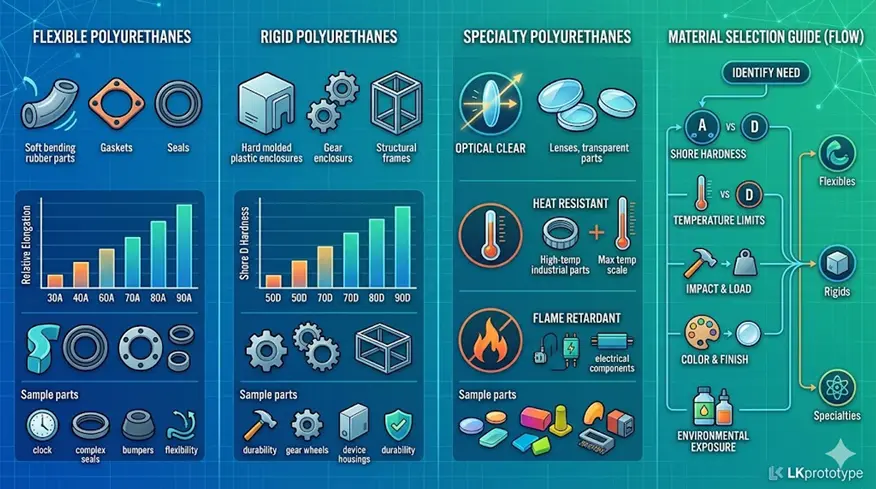
You often use urethane casting materials for strong prototypes. These materials help make things quickly and precisely. Polyurethane resins are used in many industries. Medical device makers like them because they are safe for the body. They are also easy to clean. Car and airplane companies use these resins for tough parts. Consumer goods makers pick them for products that last and look nice. You get fast drying times and little shrinking. These materials are also very strong. Urethane casting is a cheap way to make small batches. It helps you make accurate parts with silicone molds.
Key Takeaways
Urethane casting materials can be used in many ways. They are good for making prototypes and small groups of parts. You can change them to fit different jobs.
It is important to know how hard or bendy polyurethane resins are. This helps you pick the right material for your project.
Vacuum casting uses silicone molds to make detailed parts fast. It does not cost a lot of money. This is great for testing new designs.
You should always look at what your project needs. Talk to suppliers to make sure the urethane material is right for you.
Try out small samples of materials before making a lot. This helps you not make expensive mistakes. It also makes sure the material is best for your project.
URETHANE CASTING MATERIALS OVERVIEW
WHAT ARE URETHANE CASTING MATERIALS
You use urethane casting materials to make parts that look real. These materials are mostly made from polyurethane-based resins. They can be soft and bendy or hard and stiff. You can change how hard, strong, or flexible they are. This makes them great for making prototypes and small batches. You can also make them special for things like UV resistance or medical safety.
Tip: Urethane casting materials can act like many plastics, so you can try out your ideas before making lots of products.
WHAT MATERIALS ARE USED IN URETHANE CASTING
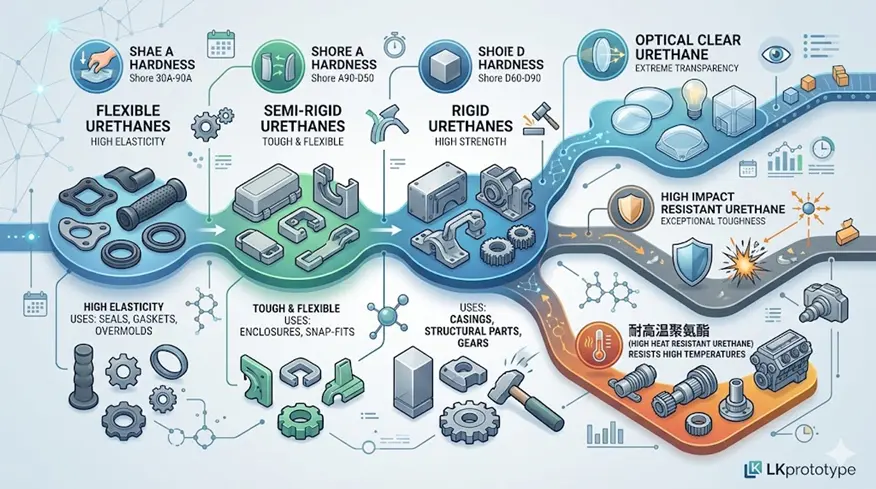
There are three main types of urethane casting materials. Each type has its own uses and features. The table below shows the main types:
Category | Hardness Range | Description |
|---|---|---|
Silicones | Softer than Shore A | Used for making molds and soft parts, known for being flexible. |
Elastomers | Shore A | Used for bendy, rubber-like parts like grips and bumpers. |
Rigid Urethanes | Shore D | Used for strong, tough parts like housings and covers, with high stiffness. |
Urethane casting materials are not like metals or thermoplastics. You can change their chemical resistance, stretchiness, and hardness. This helps you pick what your project needs.
COMMON URETHANE CASTING MATERIALS FOR PROTOTYPES
People often pick common urethane casting materials for prototypes because they have many features. These materials help you make parts that are close to the final product. You can check for wear, strength, and how smooth the surface is. Here are some examples:
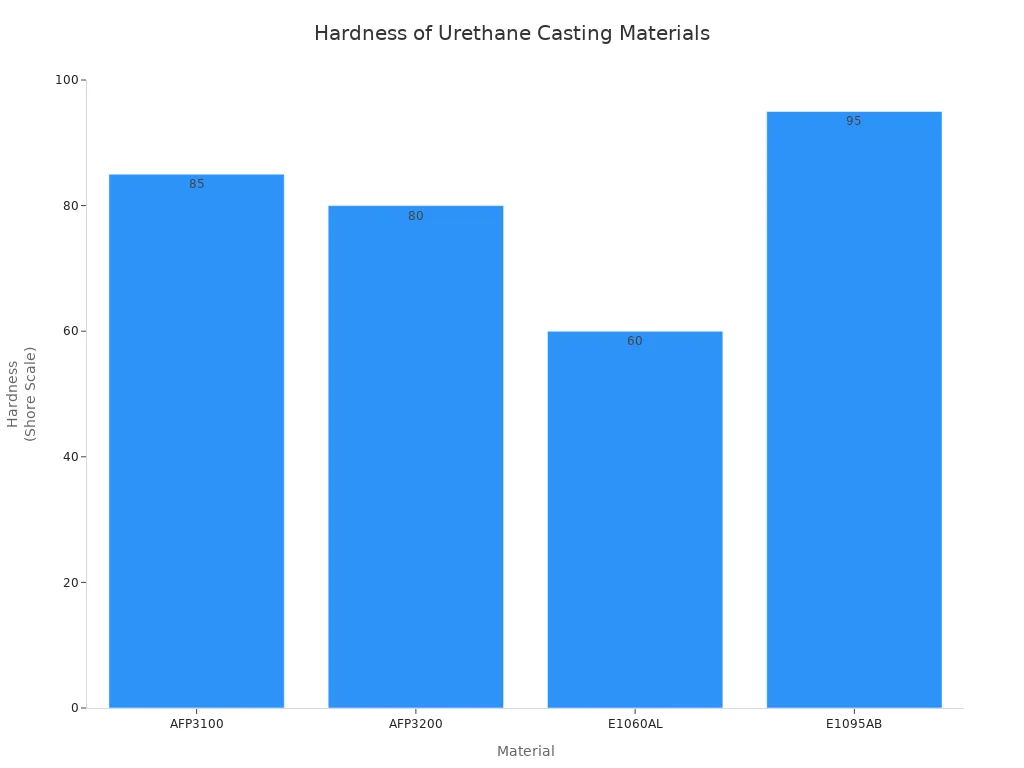
AFP3100: Strong against impacts, heat, and does not soak up much water.
AFP3200: Very strong, great against impacts, and good with chemicals.
E1060AL: Somewhat bendy, stands up to rubbing.
E1095AB: Very good against rubbing and tearing.
You can use these urethane casting materials for electronics, medical tools, and car parts.
VACUUM CASTING MATERIALS AND SILICONE MOLD MATERIALS
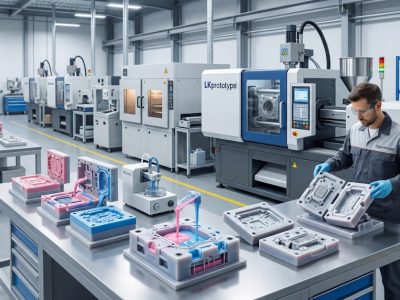
Vacuum casting helps you make detailed parts with urethane casting materials. Silicone molds are important in this process. Silicone is soft and bendy, so you can take out parts without breaking them. You pour the urethane casting materials into the silicone mold using a vacuum. This takes out air bubbles and gives you smooth, exact parts. Vacuum casting is good for making a few parts or prototypes. You get great results without spending too much money or time.
Note: Urethane casting lets you try different materials and looks before making a lot of products.
POLYURETHANE RESIN PROPERTIES AND MATERIAL PERFORMANCE
HARDNESS AND FLEXIBILITY SHORE A AND SHORE D
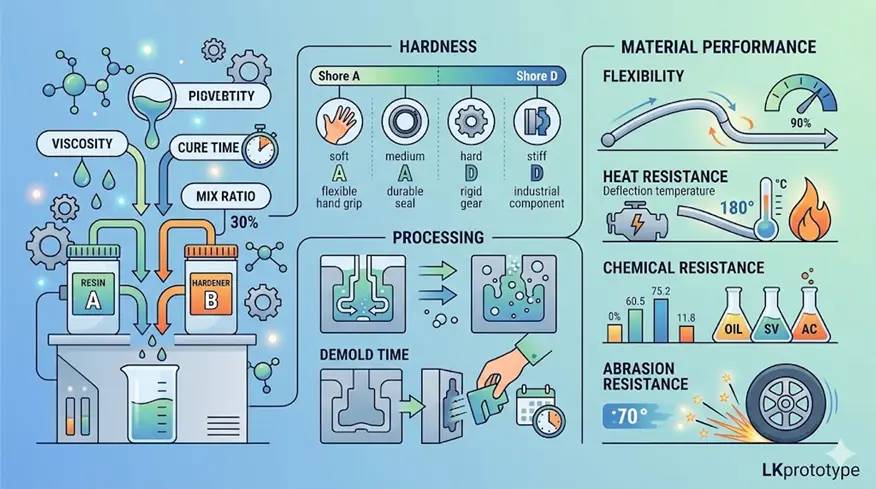
It is important to know how hard or flexible polyurethane resin is. The Shore A scale is for soft and bendy materials. The Shore D scale is for hard and stiff materials. These scales help you see how tough or soft a resin is. When you check the durometer, you learn if it bends or stays stiff. This matters because it changes how your part works. You can choose a polyurethane elastomer resin with the right durometer for your needs.
DURABILITY AND LOAD BEARING PERFORMANCE
You want your parts to be strong and last long. Polyurethane resin is tough and can hold heavy loads. The table below lists the main things you should look at:
Property | Value Range |
|---|---|
Hardness/Durometer Rating | 60A – 90D |
Ultimate Tensile Strength, PSI | 1470 - 7916 |
High Impact Strength | Yes |
Abrasion Resistance | Yes |
Excellent Cut & Tear Strength | Yes |
Resistance to Oils & Solvents | Yes |
Long Flex Life | Yes |
Good Hydrolytic Stability | Yes |
These features are good for wheels, gaskets, and foam seats. Tear resistance and tear strength matter for parts that bend or stretch.
CHEMICAL AND MOISTURE RESISTANCE
Polyurethane resin is great at fighting chemicals. It protects better from oils and greases than polyester or epoxy resins. This means your parts stay strong in harsh places. You can count on polyurethane casting resins when chemicals are around.
THERMAL RESISTANCE AND HIGH TEMPERATURE PERFORMANCE
You need to know how hot your material can get. Some polyurethane resin can be used up to 120°C all the time. For short times, it can handle up to 150°C. Regular types start to break down above 96°C. These facts help you pick the best resin for hot or changing places.
CURING TIME AND PROCESSING CHARACTERISTICS
Curing time tells you how fast your project can be done. Fast cast polyurethane resin has a pot-life of 3-4 minutes and you can take it out of the mold after 30 minutes. PolyCast G27LV is even faster, with a pot-life of 2 minutes and you can demold after 15 minutes. SIKA Biresin G26 also cures quickly. These features help you plan your work and save time.
Tip: Always check the physical properties, durometer, tear resistance, and tear strength before picking a resin. This helps you get the best results for your project.
TYPES OF URETHANE CASTING MATERIALS
RIGID POLYURETHANE CASTING MATERIALS
You use rigid urethanes when you need strong parts. These materials can hold heavy weight and keep their shape. They do not wear down fast and can be made very exact. Rigid polyurethane resins are good for parts that must not bend. People use them in factories and cars.
Characteristics | Applications |
|---|---|
High load-bearing capacity | Industrial machinery gears and couplings |
Excellent dimensional stability | Structural automotive components |
Superior abrasion resistance | Heavy-duty wheels and casters |
Low compression set | Mining equipment wear parts |
Can achieve tight tolerances | High-impact protective components |
Tip: Rigid urethane parts work well in hard places.
FLEXIBLE POLYURETHANE AND RUBBER LIKE MATERIALS
Flexible polyurethane feels like rubber. It can hold heavy things and lasts longer than rubber. You can use it for grips, seals, and bumpers. Polyurethane does not leave marks on floors. Rubber is softer and costs less at first. Pick flexible polyurethane if you want it to last and stay strong. Rubber is better if you want more grip and softness.
Flexible polyurethane is stronger, lasts longer, and fights chemicals. Rubber is better for stretching, soft landings, and saving money.
TRANSPARENT URETHANE CASTING MATERIALS
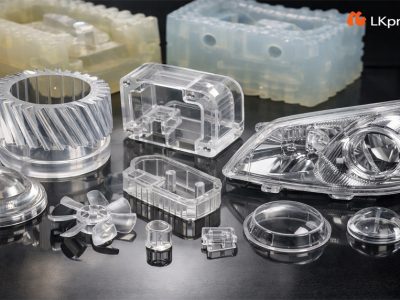
You can use transparent urethane casting materials for clear parts. New types let you see through them very well. You must be careful when making them so they stay clear. These materials are used in car lights, electronics, and medical tools. They let light go through easily and look nice.
Advanced formulas make parts very clear
Careful work keeps bubbles away
Used in lights, electronics, and medical tools
HIGH TEMPERATURE AND SPECIALTY RESINS
Some jobs need materials that can take heat or special use. High-temperature resins like Flex-It 90 and Freeman 850/51 are very strong. Flex-It 90 is good for making molds and test parts. Freeman 850/51 can take heat up to 350°F and is used for tools and molds.
Product Name | Description | Key Features |
|---|---|---|
Flex-It 90 | Semi-rigid urethane for molds and prototypes | Abrasion resistance, tear strength, chemical resistance |
Freeman 850/51 | Aluminum-filled epoxy for high-temp applications | Withstands up to 350°F, ideal for tooling and molds |
CUSTOM URETHANE MATERIAL FORMULATIONS
Sometimes you need a special formula for your part. First, tell the experts about your design and how you will use it. They look at weight, speed, heat, and chemicals. They change the formula to fit what you need. Working with a team helps you get the best part for your money. Custom cast urethane molding lets you make parts for special jobs.
Note: Give lots of details about your project to get the best custom part.
BEST URETHANE CASTING MATERIALS FOR PROTOTYPES
MATERIAL SELECTION FOR FUNCTIONAL PROTOTYPES
When picking materials for working prototypes, think about how the part will be used. Polyurethane gives you lots of choices for strength and flexibility. It is also very tough. You should pay attention to things like draft angle and how the mold is made. The table below shows what to look for:
Criteria | Description |
|---|---|
Draft Angle | Use at least one degree of draft to help remove parts and avoid breakage. |
Mold Design | Polyurethane castings match any mold shape, so you do not need much draft. |
You also need to control temperature, pressure, and curing time. This helps you make strong and exact parts. It also cuts down on waste. Good planning gets your prototypes ready for real use.
MATERIALS FOR VISUAL AND TRANSPARENT PARTS
If you want clear or see-through parts, you can pick from many polyurethane resins. These resins can look like glass or have a frosted finish. The table below lists some popular choices:
Material Type | Brand Examples | Transparency Level | Ideal Applications |
|---|---|---|---|
Water-Clear Urethanes | Clear Flex, Water Clear Ultra | High (Glass-like) | Lenses, fluid containers, models |
ABS-like Urethanes | Task Plastics | Moderate to High | Consumer products, prototypes |
Polycarbonate-like Urethanes | PX Series | High | Automotive lighting, medical tools |
Optically Clear Urethanes | OC Series | High (Clear) | Optical devices, light guides |
Simulated Acrylic | RenShape, Task Plastics | High (Acrylic-like) | Transparent casings, lighting parts |
These resins are good for parts that must look nice and work well.
MATERIALS FOR LOW VOLUME PRODUCTION
Polyurethane casting is great for making a small number of parts. You get good quality and the parts are always the same. It costs less than CNC machining or injection molding. You do not need pricey tools, and you can make molds fast. This saves both time and money. Polyurethane resins come in soft, hard, and in-between types. You can choose what fits your project best. Urethane elastomers help you make real parts for short runs. This way, companies can save money and still get strong parts.
Tip: Polyurethane casting is great for making a small or medium number of parts. You get quick results and spend less.
COMPARISON OF COMMON CASTING RESIN MATERIALS
You should look at different resins before picking one. The table below shows how polyurethane, polyester, and epoxy resins compare:
Properties | Polyurethane Resin | Polyester Resin | Epoxy Resin |
|---|---|---|---|
Chemical Resistance | Excellent | Moderate | Good |
Abrasion Resistance | High | Low | Moderate |
Mechanical Strength | High | Low | High |
Toxicity Levels | Low | High | Low |
Polyurethane is best for fighting chemicals, staying strong, and not wearing out. Polyester resins are weaker and more harmful. Epoxy resins stick well and are strong, but polyurethane is often better for real parts. Always pick the material that matches what your project needs.
URETHANE CASTING MATERIAL SELECTION GUIDE
ASSESSING PROJECT REQUIREMENTS AND DESIGN NEEDS
First, you need to know what your project needs. This helps you pick the best urethane casting material. Here are some steps to follow:
Talk to manufacturers about what they can do.
Ask them about their process and how they test things.
Get advice on your design early to stop problems later.
Learn what changes the cost, like how many parts you want, how hard your design is, and which material you choose.
You must match your project needs with the right resin. This makes sure your parts work well and last a long time.
COMPARING POLYURETHANE RESIN PROPERTIES
You can look at different polyurethane resins by checking their main features. The table below shows which types are best for certain jobs:
Property | Most Appropriate | Least Appropriate |
|---|---|---|
Abrasion Resistance: Sliding | Polyester | Polyether |
Compression Set | TDI | MDI |
Heat Aging | Polyester | Polyether |
Hydrolysis Resistance | MDI Polyether | TDI Polyester |
Tear Strength | Polyester | Polyether |
Some brands have special things they do. ArtMolds AquaClear stays clear and does not turn yellow. KastEZ Resins dry fast and are strong. You should also check if the resin can handle hits or high heat if your part needs it.
COST AND PRODUCTION CONSIDERATIONS
Urethane casting uses silicone molds made from 3D printed shapes. This saves money and gets your parts ready faster. You do not need to buy costly metal molds. The price depends on the resin, mold, and how tricky your design is. If you make more parts, each one costs less. Urethane casting is good for small batches and custom parts. Some companies ask for a minimum order to cover setup costs.
STEP BY STEP MATERIAL SELECTION PROCESS
Here are steps to help you pick the right urethane casting material:
Write down what your part needs, like being tough, bendy, or clear.
Match these needs to what the resin can do.
Look at the price and how fast you need your parts.
Try out samples if you can.
Pick the resin that fits your project best.
Tip: Always make sure the resin meets your design and project needs before you start making parts.
URETHANE CASTING CHALLENGES AND SOLUTIONS
AVOIDING MATERIAL MISMATCH IN PROTOTYPING
You want your urethane casting project to work well. Picking the wrong urethane material can cause trouble. If you use a resin that is too soft, your part might bend or break. If you pick one that is too hard, it could crack when stressed. Always match the urethane’s hardness, flexibility, and chemical resistance to your part’s needs. Talk to your supplier about your design and how you will use the part. This helps you avoid expensive mistakes in prototyping and making small batches.
Tip: Try small samples before making many parts. This helps you see if the urethane casting material fits your project.
MANAGING MOISTURE SENSITIVITY IN RESINS
Urethane resins can react with moisture in the air. This can cause bubbles or weak spots in your casting. You can manage moisture sensitivity by following these steps:
Add moisture scavengers to your urethane mix. These help stop water from getting into the resin.
Use vacuum degassing before pouring. This removes trapped air and moisture, especially in thick or sticky urethane resins.
Mix your urethane carefully and prepare your molds well. Good mixing and clean molds help keep moisture away.
If you control moisture, your urethane casting parts will look better and last longer.
PROCESSING AND CURING DEFECTS
You may see bubbles, cracks, or soft spots in your urethane casting parts. These problems often come from bad mixing, trapped air, or wrong curing times. Always follow the resin maker’s instructions for mixing and pouring. Use the right temperature and timing for curing. If you see defects, check your process and try again with better control. Clean tools and molds also help prevent problems.
OPTIMIZATION TIPS FOR BETTER MATERIAL PERFORMANCE
You can get the best results from urethane casting by following these proven tips:
Pick the right urethane material for your needs. Think about hardness, flexibility, and chemical resistance.
Use high-quality molds. Good molds give you smooth surfaces and accurate shapes.
Improve your casting process. Choose the best method and make your mixing and pouring steps better.
Post-cure your parts. Heating them after casting makes them stronger and last longer.
Check your parts for quality. Measure your parts and check their surfaces to make sure they meet your standards.
Note: Careful planning and good habits help you get strong, reliable urethane casting parts every time.
FAQ
WHAT ARE THE BEST URETHANE CASTING MATERIALS
You want the best urethane casting materials for your project. The top choices depend on what you need. For strong and stiff parts, you can use rigid polyurethane resins like Task Plastics or RenShape. For flexible parts, Clear Flex and PX Series work well. If you need clear parts, Water Clear Ultra gives you a glass-like look. Always match the material to your part’s job.
Tip: Test small samples first. This helps you see if the material fits your needs.
WHAT IS THE DIFFERENCE BETWEEN RIGID AND FLEXIBLE RESINS
Rigid resins make hard and stiff parts. These parts do not bend much. You use them for covers, housings, or machine parts. Flexible resins feel like rubber. They bend and stretch without breaking. You use them for grips, seals, or bumpers.
Resin Type | Feels Like | Best For |
|---|---|---|
Rigid | Hard | Housings, covers |
Flexible | Rubber | Grips, seals, bumpers |
WHAT MATERIALS ARE USED IN VACUUM CASTING
You use polyurethane resins most often in vacuum casting. These resins can be rigid, flexible, or clear. Silicone makes the molds because it is soft and easy to remove. Some projects use special resins for heat or chemical resistance.
Polyurethane resins (rigid, flexible, clear)
Silicone for molds
Specialty resins for tough jobs
HOW TO CHOOSE POLYURETHANE CASTING MATERIALS
You should look at what your part must do. Ask yourself these questions:
Does the part need to be hard or soft?
Will it face heat, chemicals, or water?
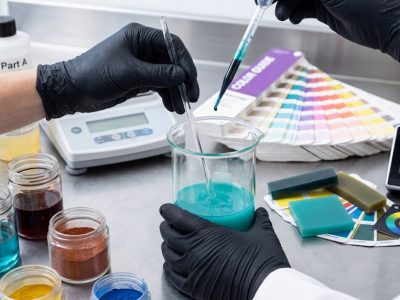
Do you want a clear or colored part?
How many parts do you need?
Write down your answers. Match them to the resin’s properties. You can ask your supplier for advice if you are not sure.
ARE URETHANE MATERIALS SUITABLE FOR END USE PARTS
Yes, you can use urethane materials for end use parts. Many industries trust them for real products, not just prototypes. Urethane parts last long, resist wear, and handle tough jobs. You find them in cars, medical tools, and consumer goods.
Note: Always check if the resin meets your safety and strength needs before using it for final products.
Now you know why it is important to learn about urethane casting materials and resin properties. Picking the right material helps you make strong and dependable parts. Urethane casting lets you choose different sizes, hardness, and colors. You can change each part to fit what you want. Talk to suppliers early so they can help you save money and make your design better. Follow the steps for picking materials and fixing problems to get the best results for your project.