
Need to quickly convert your CAD designs into physical models? Rapid prototyping services offer a fast and reliable way to create prototypes for testing and validation. This article dives into the different technologies available, the materials you can use, and how these services can accelerate your product development. Key Takeaways Rapid prototyping is essential for quickly producing functional prototypes from CAD models, enabling early design testing and iterations. Key technologies in rapid prototyping, such as CNC machining, 3D printing, and injection molding, provide flexibility and efficiency for both low and high-volume productions. Selecting appropriate materials is crucial for prototype characteristics,…

When selecting plastics for vacuum forming, choosing the right material is crucial for achieving the desired results in your project. This guide explores the most commonly used plastics, such as ABS, Polycarbonate, HDPE, and PVC, detailing their properties and applications. You’ll learn which plastic best suits your needs, whether for automotive parts, food packaging, or other applications. Key Takeaways Vacuum forming is a cost-effective and efficient manufacturing process that shapes plastic using heat and suction, widely used across various industries for producing lightweight and durable components. Commonly used plastics in vacuum forming include ABS, Polycarbonate, HDPE, and PVC, each offering…
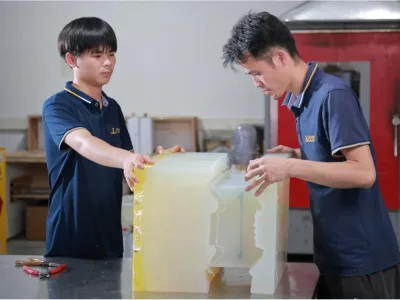
Looking to speed up product development? Rapid prototyping services offer fast, precise prototypes for metals and plastics. This article explores key techniques and their benefits. Key Takeaways Rapid prototyping accelerates product development by allowing quick iterations and physical model creation from CAD data, utilizing techniques such as CNC machining, 3D printing, and vacuum casting. Key benefits of rapid prototyping include reduced development costs, faster feedback on designs, and early identification of design flaws, thus enhancing the overall efficiency of the product development lifecycle. Choosing the right rapid prototyping method depends on factors like budget, complexity, and production volume, with options…

Rapid prototyping softwares are crucial for turning design ideas into functional prototypes quickly. This article highlights the top 10 rapid prototyping tools for 2026, focusing on diverse needs like UI/UX design, collaboration, and ease of use. Discover the best options for speeding up your design process. Key Takeaways The top 10 rapid prototyping tools in 2026 include Figma, Marvel, and Proto.io, each offering unique features for various design needs. Selecting a rapid prototyping tool involves considering user interface intuitiveness, integration capabilities, and the specific project requirements. Rapid prototyping is crucial in product development for quick iterations, user feedback, and early…

Plastic moulding is the process of shaping plastics into precise forms using molds, a fundamental manufacturing technique. This article covers key plastic moulding methods like injection, extrusion, and blow molding. We will examine their benefits, and applications across various industries. Key Takeaways Plastic molding is a versatile manufacturing process for shaping materials like polymers into complex designs. This is achieved using various methods such as injection, extrusion, and blow molding. Injection molding is the most efficient and cost-effective method for high-volume production. Other methods like compression and rotational molding are better suited for prototypes and large hollow parts, respectively. Selecting…
Need to prototype a product without breaking the bank? This article covers the key steps and methods on how to prototype a product, guiding you from an idea to a functional prototype. Learn about defining your product, creating sketches, building physical models, and refining your design. Discover cost-effective techniques and avoid common pitfalls to ensure your prototype meets user needs. Key Takeaways Prototyping transforms ideas into tangible models, allowing for early evaluation and informed decision-making to save time and costs. Engaging users during the prototyping phase provides critical feedback, helping to refine designs and ensure the final product meets user…

Understanding Prototypes and Their Importance A prototype is a model or early version of your invention that helps you test and refine your idea. Creating basic prototypes using everyday materials is an essential step in refining designs before moving into mass production. Prototypes are essential for identifying and fixing design flaws, understanding user needs, and gathering feedback. The prototype development process can save time and money in the long run by ironing out production issues and rectifying problems before mass production. Creating a proof of concept can further validate the feasibility of your invention before moving to more advanced prototyping…
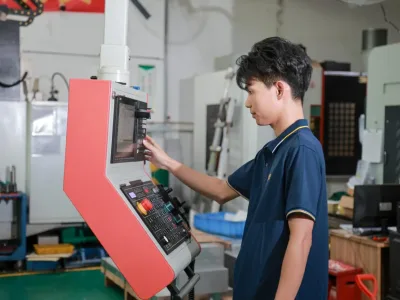
CNC machining prototypes utilize advanced computer-controlled machines to create precise prototypes rapidly, showcasing their versatility and precision across various industries, including military, medical, automotive, aerospace, oil, and energy. This process is crucial in product development, offering advantages like speed, accuracy, and material versatility. Read on to explore the benefits and applications of CNC prototyping in various industries. Key Takeaways CNC prototype machining accelerates product development by enabling rapid iterations and precise prototypes that closely match final product specifications. The versatility of CNC machining allows for the use of various materials like metals, plastics, and composites, making it adaptable to diverse…
Want to convert your CAD design into a sample prototype or small-batch production? Upload your files and get a fast and accurate quote.