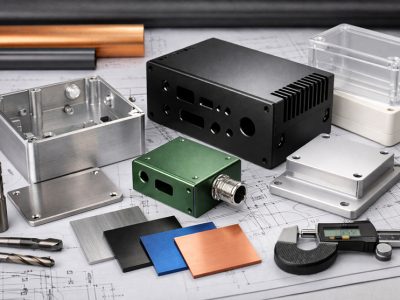
You need good materials, finishes, and design steps to make strong electronics enclosures with CNC machining. This process is fast, accurate, and flexible. Manufacturers use aluminum alloys, copper, stainless steel, titanium, and engineering plastics because each has special features and uses. Material CategoryTypical GradesKey PropertiesTypical ApplicationsAluminum Alloys6061, 7075, 5052Light, conducts heat wellCases, frames, heat sinksCopper / BrassC110, C101, H59Conducts electricity wellTerminals, connectors, shieldsStainless Steel304, 316, 303Resists rustFasteners, precise partsTitanium AlloyTi-6Al-4VStrong but lightMedical, aerospace electronicsGeneral Engineering PlasticsABS, PC, PMMALight, easy to shapeEnclosures, light coversMechanical Performance PlasticsPOM, PA6, PETTough, resists wearGears, sliding parts CNC machining for electronics enclosures lets you pick the…
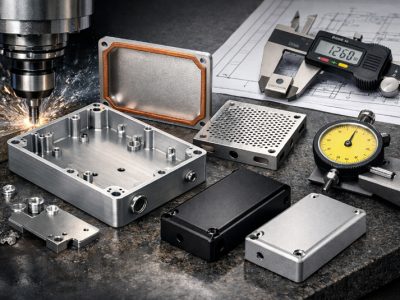
When designing boxes for electronics, you face unique challenges. CNC machining electronics enclosures offers a reliable solution for creating durable and high-performance enclosures. This method is excellent for EMI shielding, achieving tight tolerances, and delivering attractive finishes. By choosing cnc machining electronics enclosures, you gain several advantages, including the use of conductive materials, precise machining, and innovative design strategies. Conductive materials such as aluminum and copper are ideal for cnc machining electronics enclosures, providing effective heat dissipation and EMI shielding. Precision machining ensures that cnc machining electronics enclosures are consistently accurate and fit perfectly every time. Advanced surface finishes enhance…
Want to convert your CAD design into a sample prototype or small-batch production? Upload your files and get a fast and accurate quote.