LKprototype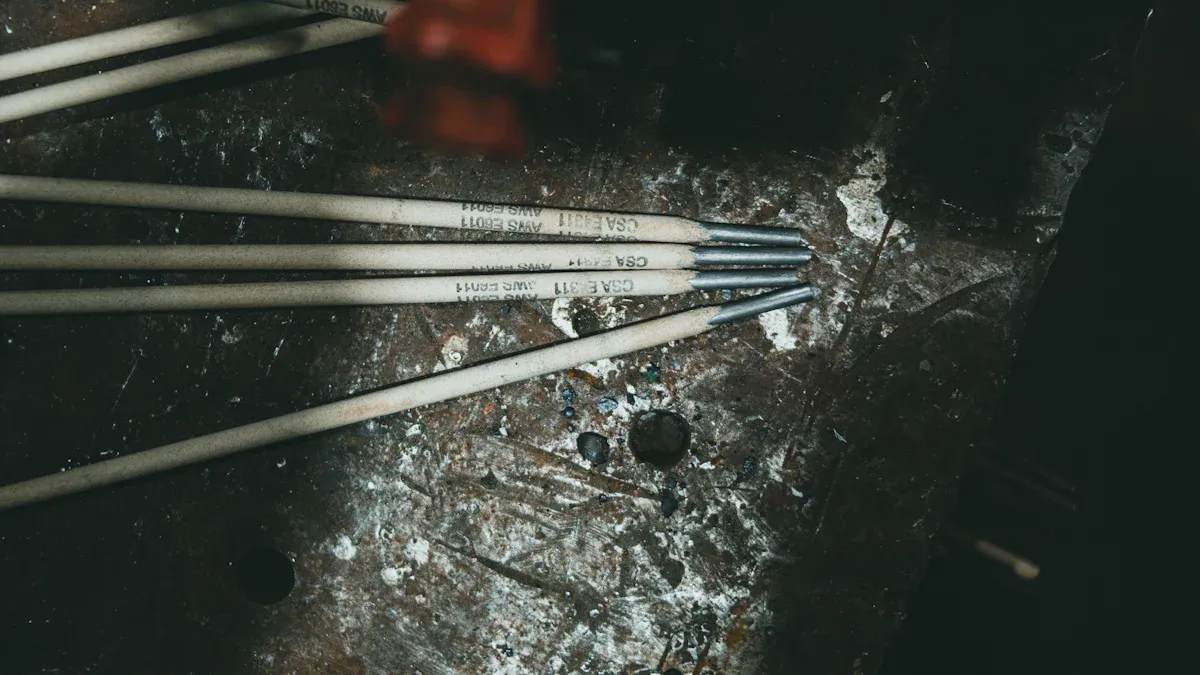
Picking the right stainless welding rod is very important. It helps make strong and long-lasting welds. The correct rod works well with the base metal. It lowers the chance of cracks and makes better welds. For example, a 309L rod joins carbon steel to stainless steel. It gives a ferrite content of 14-16 FN, stopping weld problems. High-carbon steel might need a 312 rod. This rod gives ferrite levels of 70-90 FN, which stops cracks. Also, hydrogen moves slower in stainless welds than in carbon steel. So, choosing the right rod avoids mistakes.
Here are five reliable brands for stainless welding rods: Lincoln Electric, Hobart, ESAB, Blue Demon, and Forney. Each brand has special features for different welding jobs.
Key Takeaways
Picking the right stainless welding rod is very important. It helps prevent cracks and makes welds stronger and better.
Lincoln Electric makes great rods that stop rust well. They have many options for different jobs, making them popular with pros.
Hobart rods are easy to use and work for everyone. They are good for many positions and general welding tasks.
ESAB rods are made for tough jobs in factories. They work well and resist rust, perfect for hard conditions.
Blue Demon and Forney make cheap but good-quality rods. They are great for DIY projects and general welding, good for all skill levels.
Lincoln Electric Stainless Welding Rods
Brand Overview
Lincoln Electric is a well-known name in welding. They have been making great welding products for over 100 years. The company is famous for its smart designs and top-quality tools. Their stainless steel welding rods work well for many tasks. Whether you are building structures or doing special projects, Lincoln Electric has reliable choices.
Features of Lincoln Electric Stainless Steel Welding Rods
Lincoln Electric's stainless steel rods are known for their high quality. They are made for both skilled welders and beginners. These rods have 2-3% molybdenum, which helps stop rust in tough spots. Their low carbon levels prevent weld damage over time. They also work with basic fluxes that keep most of the chromium in the weld, making it stronger.
Here’s a quick look at how Lincoln Electric's stainless steel rods perform:
Flux | Classification | Yield Strength @ 0.2% Offset (MPa) | Tensile Strength (MPa) | Elongation (%) |
|---|---|---|---|---|
Lincolnweld® P2007™ | Typical Result | 390 | 559 | 39 |
These rods come in different types like er308, er309, er347, er410, and er430. Each type is made for specific jobs, offering flexibility and dependability.
Pros and Cons
Pros:
Great rust protection due to molybdenum.
Low carbon helps avoid weld damage.
Strong and long-lasting welds.
Works for many stainless steel welding needs.
Cons:
High quality means higher cost.
May need special fluxes for best results.
Lincoln Electric stainless steel rods are a solid pick for strong and rust-resistant welds. They are perfect for jobs needing heat strength and durability.
Stainless Steel Welding Rod Types Available
Lincoln Electric has many stainless steel welding rods for different jobs. Each rod is made for a specific purpose to give the best results. Here’s a simple guide to their popular types:
ER308/ER308L:
These rods are great for welding 304 and 304L stainless steel. They resist rust well and are used in food equipment and chemical tanks.ER309/ER309L:
Use these rods to join stainless steel to carbon steel. They are strong and resist cracking, even in high heat.ER316/ER316L:
These rods have molybdenum, which helps fight rust in tough places. They are ideal for marine work and chemical plants.ER347:
Stabilized with niobium, this rod handles high heat. It’s good for welding 321 and 347 stainless steel.ER410:
Made for welding 410 stainless steel, this rod is used for hard-facing and wear-resistant parts.ER430:
This rod is for welding 430 stainless steel. It’s often used for decorative items and car trims.
Rod Type | Best For | Key Feature |
|---|---|---|
ER308/308L | 304/304L stainless steel | Great rust resistance |
ER309/309L | Joining different metals | Strong, crack-resistant |
ER316/316L | Marine and chemical uses | Molybdenum for extra strength |
ER347 | High-heat jobs | Niobium-stabilized |
ER410 | Hard-facing and wear resistance | Tough and long-lasting |
ER430 | Decorative and car trims | Smooth and shiny finish |
Tip: Always pick a rod that matches your metal and job. This ensures strong welds and avoids problems later.
Lincoln Electric’s wide range of rods makes it easy to find the right one. Whether you’re fixing boats, building structures, or making decorations, they have a rod for you.
Hobart Stainless Welding Rods
Brand Overview
Hobart is a well-known brand in welding. They have been trusted for many years. The company makes high-quality tools that are easy to use. Their stainless steel welding rods work for both experts and beginners. Whether you’re doing basic welding or special tasks, Hobart has dependable options.
Features of Hobart Stainless Steel Welding Rods
Hobart rods are known for their flexibility and great performance. They work with both AC and DC power, fitting many welding machines. You can use them in flat, vertical, horizontal, or overhead positions. This makes them useful for many different projects.
A big advantage of Hobart rods is their steady arc. This helps create smooth welds with little mess, saving cleanup time. They also freeze quickly, which is helpful for thin materials like sheet metal. Plus, they meet AWS A5.1/A5.1M:2004 standards, proving their quality.
Here’s a simple look at Hobart’s features:
Feature | Description |
|---|---|
Diameter | 5/32" |
Weight | 10 lb |
Electrode Type | E6013 Carbon Steel Electrode |
Applications | General fabrication, machine parts, metal building, and more |
Power Sources | Can be used with both AC and DC power sources |
Welding Positions | Suitable for flat, horizontal, vertical, and overhead positions |
Arc Stability | Produces a very stable arc with good weld bead appearance |
Characteristics | Fast freeze characteristics, ideal for sheet metal welding, and quick clean-up |
Compliance | Meets AWS A5.1/A5.1M:2004 requirements |
Pros and Cons
Pros:
Works with AC and DC power.
Can be used in many welding positions.
Makes smooth welds with a steady arc.
Freezes fast, good for thin materials.
Meets top industry standards.
Cons:
Limited choices for special stainless steel welding.
Not the best for very corrosive environments.
Hobart stainless steel rods are great for general welding. They are versatile and perform well, making them a good pick for many jobs.
Stainless Steel Welding Rod Types Available
Hobart provides different stainless steel welding rod types for various tasks. Each rod is made for a specific job, ensuring strong and dependable welds. Below are the most common options:
E308L-16:
This rod works well with 304 and 304L stainless steel. It resists rust, making it great for food equipment and chemical storage tanks.E309L-16:
Use this rod to join stainless steel to mild steel. It handles heat well and prevents cracks during welding.E316L-16:
This rod has molybdenum, which helps it fight rust in tough conditions. It’s ideal for marine work and chemical factories.E347-16:
Stabilized with niobium, this rod is good for high-heat jobs. It’s often used for welding 321 and 347 stainless steel.E410-16:
This rod is made for welding 410 stainless steel. It’s commonly used for hard-facing and making surfaces resistant to wear.
|
Tip: Choose the right rod for your project. This ensures strong and lasting welds.
Hobart’s rods offer flexibility for many projects. Whether it’s general welding or special tasks, there’s a rod to suit your needs.
ESAB Stainless Welding Rods
Brand Overview
ESAB is a top name in welding supplies. They focus on making high-quality products and have a strong delivery system. This helps them meet the needs of industries like cars, buildings, and factories. Their commitment to helping customers and offering support makes them a trusted brand worldwide.
Features of ESAB Stainless Steel Welding Rods
ESAB rods are made for steady and reliable performance. They resist rust well, so they work in tough conditions. These rods are also flexible, making them useful for many welding jobs.
Here’s a simple look at ESAB rod details:
Specification | Detail |
|---|---|
Classifications | EN 14700 : E Fe7, EN ISO 3581-A : E 13 B 4 2, SFA/AWS A5.4 : E410-15, Werkstoffnummer : 1.4009 |
Welding Current | DC+ |
Alloy Type | 13% Cr |
Coating Type | Lime Basic |
Main benefits of ESAB rods include:
High quality for steady welds.
Great rust resistance for tough jobs.
Useful for many types of welding tasks.
These features make ESAB rods a good pick for both pros and beginners.
Pros and Cons
Pros:
Top materials for strong and steady welds.
Excellent rust resistance for lasting results.
Flexible rods for different welding needs.
Helpful customer service and support.
Cons:
Higher price due to premium quality.
Hard to find in some areas.
ESAB stainless steel rods are strong and reliable. They are great for projects needing durability and rust resistance.
Stainless Steel Welding Rod Types Offered
ESAB makes many stainless steel welding rods for different jobs. Each rod is built to work well, whether for simple fixes or tough industrial tasks. These rods are strong and can handle harsh conditions.
Here are some popular ESAB stainless steel welding rods:
E316L-WM:
This rod is great for welding 316L stainless steel. It resists rust, making it perfect for marine work and chemical tools. Its ferrite volume fraction is 6.7%, giving it good strength and flexibility.E309L-WM:
Use this rod to join stainless steel to mild steel. It handles high heat and avoids cracks. With a ferrite volume fraction of 8.4%, it stays stable during welding.E312-WM:
This rod is best for joining different metals or fixing worn parts. It has a high ferrite volume fraction of 19.3%, making it very strong and crack-resistant.
Welding Material | Ferrite Volume Fraction (%) |
|---|---|
316L-WM | 6.7 |
309L-WM | 8.4 |
312-WM | 19.3 |
Tip: Pick the right rod for your project. This helps make strong and lasting welds.
ESAB’s rods are flexible and dependable. Whether fixing boats, joining metals, or working in hot areas, there’s a rod for you. Their variety helps you handle any welding job with ease.
Blue Demon Stainless Welding Rods
Brand Overview
Blue Demon is a well-known brand in welding. They make creative products for both experts and beginners. Their stainless steel welding rods are high-quality and give steady results. Whether for big projects or small fixes, Blue Demon has dependable options. Their products are easy to find and are budget-friendly without losing quality.
Features of Blue Demon Stainless Steel Welding Rods
Blue Demon rods are made to be flexible and simple to use. They work with both AC and DC power, fitting most welding machines. These rods create a steady arc, making smooth and neat welds. They also reduce spatter, saving time on cleanup.
A key feature is their ability to work in different positions. You can weld flat, vertical, or overhead with ease. This makes them useful for many tasks. Blue Demon rods meet AWS standards, proving their reliability in various conditions.
Here’s a summary of their main features:
Feature | Description |
|---|---|
Power Compatibility | Works with AC and DC power sources |
Welding Positions | Suitable for flat, vertical, and overhead |
Arc Stability | Produces a steady and smooth arc |
Compliance | Meets AWS standards for quality |
Pros and Cons
Pros:
Affordable and still good quality.
Fits most welding machines.
Works in many welding positions.
Less spatter means easier cleanup.
Cons:
Few choices for special stainless steel welding.
Not the best for very corrosive places.
Blue Demon rods are great for general welding jobs. They are affordable and work well, making them a smart pick for both new and skilled welders.
Stainless Steel Welding Rod Types Offered
Blue Demon has many stainless steel welding rods for different jobs. Each rod is made to work well, whether for small fixes or special tasks. Below are the most common types and their uses:
E308L-16
This rod is great for welding 304 and 304L stainless steel. It resists rust, making it good for food tools and chemical tanks.E309L-16
Use this rod to join stainless steel to mild steel. It handles heat well and stops cracks during welding.E316L-16
Perfect for marine and chemical work, this rod has molybdenum. It fights rust in tough conditions.E347-16
Stabilized with niobium, this rod works for high-heat jobs. It’s ideal for welding 321 and 347 stainless steel.E410-16
This rod is used for hard-facing and wear-resistant surfaces. It’s best for welding 410 stainless steel.
Rod Type | Best Uses | Main Feature |
|---|---|---|
E308L-16 | Food tools, chemical tanks | Great rust resistance |
E309L-16 | Joining stainless to mild steel | Handles high heat |
E316L-16 | Marine and chemical work | Molybdenum for extra strength |
E347-16 | High-temperature tasks | Niobium-stabilized |
E410-16 | Hard-facing, wear resistance | Durable and long-lasting |
Tip: Pick a rod that matches your material and job. This helps make strong welds and avoids problems later.
Blue Demon’s rods are flexible and reliable. Whether for DIY or professional work, there’s a rod for you. They are affordable and good quality, making them a smart choice for all welders.
Forney Stainless Welding Rods
Brand Overview
Forney Industries has been making welding tools since 1932. It is one of the oldest family-owned tool companies in the U.S. In the 1940s, they made history by selling the first arc welder to the public. Today, Forney sells thousands of products like stainless steel welding rods, abrasives, and safety gear. Their tools are affordable and backed by great customer service. With over 150 service centers across the U.S., Forney ensures help is always nearby.
Aspect | Details |
|---|---|
Company Background | Started in 1932, family-owned for decades. |
Historical Milestone | First public arc welder in the 1940s. |
Product Categories | Welding tools, abrasives, safety gear, and shop tools. |
Market Strategy | Affordable prices and local support. |
Warranty Service Centers | Over 150 locations in the U.S. |
Unique Programs | Greenback™ Rebate Program for discounts. |
Features of Forney Stainless Steel Welding Rods
Forney’s stainless steel rods are easy to use and versatile. They work with both AC and DC power, so they fit most welding machines. These rods create a steady arc, making smooth welds with little mess. This saves time on cleanup and boosts efficiency. You can use them in flat, vertical, or overhead positions, making them great for many projects.
Forney rods are also very durable. They resist rust and cracking, ensuring strong and lasting welds. They meet industry standards, so they’re reliable for both professional and DIY jobs. Whether fixing structures or making decorations, Forney rods give consistent results.
Pros and Cons
Pros:
Works with most welding machines.
Creates smooth welds with a steady arc.
Can be used in different positions.
Strong and resists rust and cracks.
Great customer service and warranty support.
Cons:
Few options for special stainless steel welding.
Not ideal for very corrosive environments.
Forney stainless steel rods are dependable for general welding. They are affordable, easy to use, and work well for both beginners and experts.
Stainless Steel Welding Rod Types Offered
Forney has different stainless steel welding rods for various jobs. Each rod is made to create strong and dependable welds. Whether fixing something simple or working on a special project, there’s a rod for you. Here are the most common types and their uses:
E308L-16
This rod is great for 304 and 304L stainless steel. It fights rust, making it perfect for food tools and chemical tanks. Its low carbon helps stop weld damage over time.E309L-16
Use this rod to join stainless steel to mild steel. It handles heat well and prevents cracks during welding. It’s ideal for structural fixes and industrial work.E316L-16
This rod has molybdenum, which helps it resist rust in tough places. It’s a good choice for marine tasks and chemical plants.E347-16
Stabilized with niobium, this rod works well in high heat. It’s used for welding 321 and 347 stainless steel in heat-sensitive areas.E410-16
This rod is made for hard-facing and wear-resistant surfaces. It’s often used for welding 410 stainless steel in tools and machinery.
Rod Type | Best Uses | Key Feature |
|---|---|---|
E308L-16 | Food tools, chemical tanks | Rust-resistant |
E309L-16 | Joining stainless to mild steel | Crack-resistant |
E316L-16 | Marine and chemical work | Molybdenum for extra strength |
E347-16 | High-temperature tasks | Niobium-stabilized |
E410-16 | Hard-facing, wear resistance | Durable and long-lasting |
Tip: Pick the right rod for your project. This ensures strong welds and avoids problems later.
Forney’s stainless steel welding rods are strong and flexible. Whether for small repairs or big jobs, there’s a rod that suits your needs.
Comparison of Stainless Steel Welding Rod Brands

Key Differences in Quality, Price, and Performance
Different brands of stainless steel welding rods vary in quality, cost, and use. Lincoln Electric is known for its strong and rust-proof rods. These are great for professional jobs but can be pricey. Hobart offers good performance at a lower cost. Their rods are flexible and work well for general tasks, making them a favorite for hobbyists.
ESAB makes high-quality rods for tough industrial jobs. They are perfect for places like chemical plants or marine work. However, finding them in some areas can be hard. Blue Demon provides affordable rods that are still reliable. These are ideal for beginners or small projects. Forney has been around for a long time and makes easy-to-use rods. Their products are budget-friendly and come with great customer support, making them perfect for DIY projects.
Summary of Stainless Steel Welding Rod Types and Applications
Knowing the types of stainless steel welding rods helps you pick the right one. Each type has special features and uses. For example, E308L rods have low carbon, which stops weld damage. They are good for welding austenitic stainless steel. E316L rods have nickel and molybdenum, which fight rust well. These are great for chemical plants. E308L-17 rods make high-quality welds and resist heat damage.
Here’s a simple chart of common rod types and their uses:
Electrode Type | Characteristics | Application | Polarity |
|---|---|---|---|
E308L-17 | High weld quality, low carbon content | Resists rust at high heat | DC+ |
E308L | Low-carbon, prevents weld damage | For austenitic stainless steel | DC+ |
E316L | Fights rust with nickel and molybdenum | Used in chemical plants | DC+ |
These rods work with TIG and MIG welding methods. They are used for many jobs, like fixing structures, marine work, or making decorations. Picking the right rod gives you strong and lasting welds, avoiding problems later.
Tip: Always choose a rod that matches your metal and welding method. This ensures strong welds and better results.
Each brand has its own special benefits for welding. Lincoln Electric is great for strong and rust-proof welds. Hobart makes flexible rods for everyday jobs. ESAB is best for tough industrial work in harsh places. Blue Demon offers budget-friendly rods for beginners. Forney is easy to use and has great customer help.
For expert welding, pick Lincoln Electric or ESAB. Hobby welders will like Hobart or Forney. For marine or chemical jobs, go with ESAB or Lincoln Electric. Always choose the right rod for your project to get the best results.
FAQ
What is the best stainless welding rod for beginners?
If you're new to welding, Hobart E308L-16 rods are a smart pick. They are simple to use, work in different positions, and make clean welds. These rods also fight rust, making them great for general welding tasks.
Can I use the same rod for stainless steel and mild steel?
Yes, you can use ER309L or E309L-16 rods. These rods are made to join stainless steel and mild steel. They handle heat well and stop cracks, giving strong and lasting welds.
How do I choose the right welding rod for my project?
Choose a rod that matches your metal and job. For example:
E316L is best for marine or chemical jobs.
E308L works well for food equipment.
Tip: Check the AWS classification to ensure compatibility.
Are stainless welding rods rust-resistant?
Yes, most stainless welding rods resist rust. Rods like E316L and E308L have molybdenum and chromium, which help prevent corrosion. Always pick a rod that fits your environment.
What is the difference between E308L and E316L rods?
E308L rods are good for general stainless steel welding. E316L rods have molybdenum, which gives extra rust protection. Use E316L for marine or chemical jobs where rust is a problem.
Note: Keep rods in a dry place to protect their quality.